|
Description
|
The story starts long before the granting of independence to Ghana in 1957, with pre-colonial societies, slavery and col...
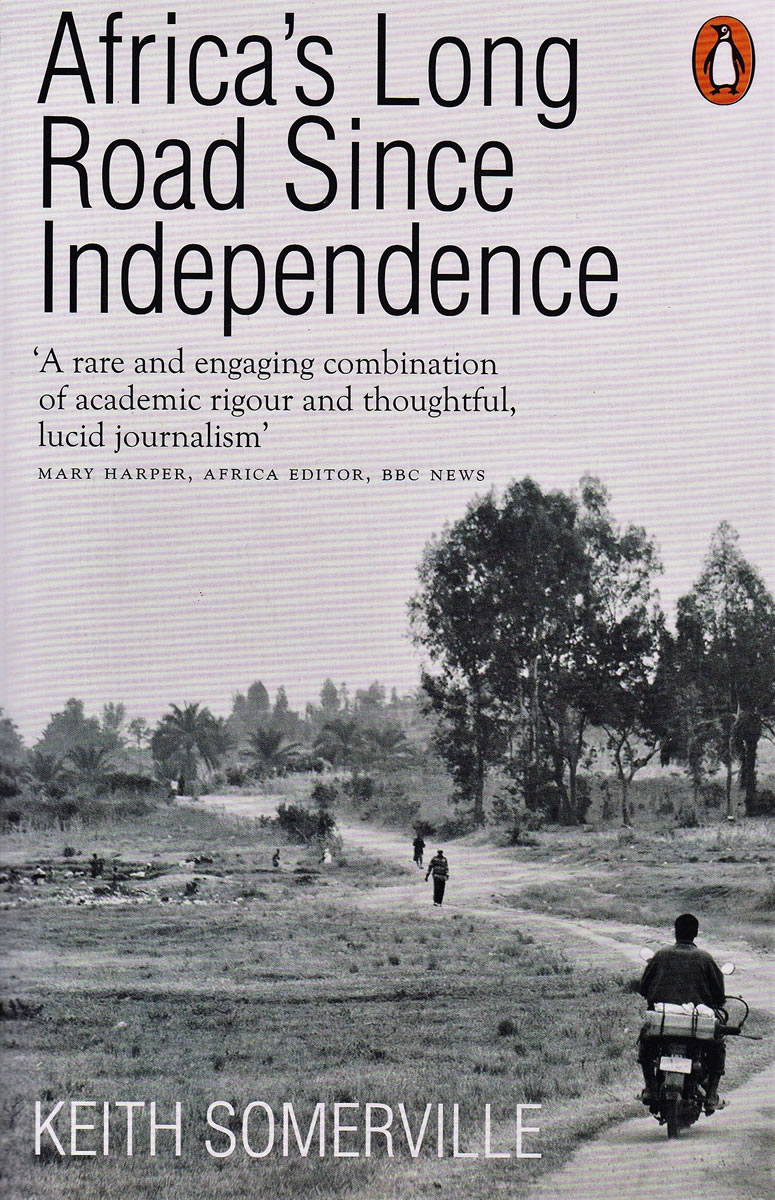
The story starts long before the granting of independence to Ghana in 1957, with pre-colonial societies, slavery and colonial occupation. But the thrust of Keith Somerville’s narrative looks at Africa in the closing decades of the old millennium and the beginning of the new millennium. While this book examines post-colonial conflicts within and between new states, it also considers the history of the peoples of Africa — their struggle for economic development in the context of harsh local environments and the economic straitjacket into which they were strapped by colonial rule is charted in detail. The importance of imposed or inherited structures, whether the global capitalist system, of which Africa is a subordinate part, or the artificial and often inappropriate state borders and political systems set up by colonial powers, will be examined in the light of the exercise of agency by African peoples, political movements and leaders. Author: Keith Somerville ISBN: 9781849045155
Read more
Show less
|
Drawing on many years of African experience, John Reader has written a book of startling grandeur and scope that recreat...
Drawing on many years of African experience, John Reader has written a book of startling grandeur and scope that recreates the great panorama of African history, from the primeval cataclysms that formed the continent to the political upheavals facing much of the continent today. Reader tells the extraordinary story of humankind's adaptation to the ferocious obstacles of forest, river and desert, and to the threat of debilitating parasites, bacteria and viruses unmatched elsewhere in the world. He also shows how the world's richest assortment of animals and plants has helped - or hindered - human progress in Africa. Author: John Reader ISBN:9780140266757
Read more
Show less
|
Between 2000 and 2010, six of the ten fastest-growing economies worldwide were African. In this favorable environment, h...
Between 2000 and 2010, six of the ten fastest-growing economies worldwide were African. In this favorable environment, how do we make sure jobs and poverty reduction follow? Now is the time for African countries to consider how economic growth and political liberalization should reinforce each other. Africa has experienced two liberations: the first from colonial and racist regimes and the second from the autocrats who often followed foreign rule. At the end of the 1970s, just three African countries regularly held multiparty elections; more than 40 do today. Africa’s political evolution points to a third liberation, one from political economies characterized by graft, crony capitalism, rent-seeking, elitism and social inequality. This liberation will open up the economic space in which business can compete, a necessary condition for expanding employment. The debate is about how Africa can realize its economic potential and avoid the disappointments of the first 50 years of independence. Using examples from Central and South America, South-East and South Asia, and the Middle East, the authors examine what means are best to match political liberalization with growth. Author: Greg Mills ISBN:9780143538820
Read more
Show less
|
The period between the two World Wars were troubling years for colonial empire. Individuals and organizations began to c...
The period between the two World Wars were troubling years for colonial empire. Individuals and organizations began to call for major reforms and an end to white supremacy and colonial rule, contributing first to local unrest and protest and then to anticolonial activity not only in Africa but the United States and Europe as well. In this compelling history, Jonathan Derrick, a renowned scholar of Africa's past, recounts the opposition to British and French rule practiced both by Africans living on the continent and by European anticolonialists and members of the Black Diaspora. He covers campaigns waged by an early incarnation of the African National Congress and other groups in South Africa who fought against legal and other aspects of white minority rule. He also talks of the Kikuyu protests against the settler regime in Kenya; Marcus Garvey's African American movement and its role in sparking interest in Africa; the ?toile Nord Africaine, formed mainly by Algerians in France, that called for the independence of French North Africa; protests led by European critics against forced labor in Kenya and French Equatorial Africa; and the activity of small militant groups like the Ligue de D?fense de la Race N?gre (LDRN) in France and George Padmore's International African Service Bureau (IASB) in Britain. Derrick examines the role of the Comintern and Western Communist parties that were opposed to Western colonialism and ready to support militant action against it. He highlights common misunderstandings regarding the collaboration between Communists and other left-wing organizations on the one hand and African nationalists and pan-Africanists on the other, and examines the Communists' separation from Padmore, as well as the LDRN leader Garan Kouyate. He shows that, although colonial rulers greatly feared the specter of Communism in Africa, actual Communist activity was in fact quite small. Derrick reveals how, with the exception of a few colonies, anticolonial activity was easily organized, primarily because militants in Europe had the freedom to operate and create a tremendous impact. In the later 1930s, nationalist movements, fuelled by African outrage at the Italian occupation of Ethiopia, began to spread in parts of Africa. The approach and onset of the Second World War affected the rhetoric of anticolonialists, with French Communists opposing calls for independence as long as the danger of Nazism and Fascism existed, but some militants continued their anti-empire campaigns until 1939. The war then pushed colonial issues to the background, but as Derrick argues, in the long term the anticolonialists of the interwar era may have helped pave the way for later decolonization. Author: Jonathan Derrick ISBN:9781850659365
Read more
Show less
|