|
Description
|
A spectre is haunting Europe – the spectre of failed capitalism. In this startling account of Europe’s economic rise and...
A spectre is haunting Europe – the spectre of failed capitalism. In this startling account of Europe’s economic rise and catastrophic fall, Yanis Varoufakis pinpoints the flaws in the European Union’s design – a design that was thought up after the Second World War, and is responsible for Europe’s fragmentation and the resurgence of racist extremism across the Continent. When the financial crisis struck in 2008, the political elite’s response ensured that it would be the weakest citizens of the weakest nations that would pay the price for the bankers’ mistakes. Drawing on his personal experience of negotiations with the eurozone’s financiers, and offering concrete policies to reform Europe, Varoufakis shows how we concocted this mess, and points the way out of it. And The Weak Suffer What They Must? reminds us of our history, in order to save European capitalism and democracy from the abyss. Author: Yanis ISBN:9781568585994
Read more
Show less
|
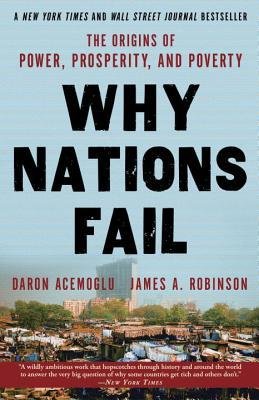
Is it culture, the weather, geography? Perhaps ignorance of what the right policies are? Simply, no. None of these facto...
Is it culture, the weather, geography? Perhaps ignorance of what the right policies are? Simply, no. None of these factors is either definitive or destiny. Otherwise, how to explain why Botswana has become one of the fastest growing countries in the world, while other African nations, such as Zimbabwe, the Congo, and Sierra Leone, are mired in poverty and violence? Daron Acemoglu and James Robinson conclusively show that it is man-made political and economic institutions that underlie economic success (or lack of it). Korea, to take just one of their fascinating examples, is a remarkably homogeneous nation, yet the people of North Korea are among the poorest on earth while their brothers and sisters in South Korea are among the richest. The south forged a society that created incentives, rewarded innovation, and allowed everyone to participate in economic opportunities. The economic success thus spurred was sustained because the government became accountable and responsive to citizens and the great mass of people. Sadly, the people of the north have endured decades of famine, political repression, and very different economic institutions—with no end in sight. The differences between the Koreas is due to the politics that created these completely different institutional trajectories. Based on fifteen years of original research Acemoglu and Robinson marshall extraordinary historical evidence from the Roman Empire, the Mayan city-states, medieval Venice, the Soviet Union, Latin America, England, Europe, the United States, and Africa to build a new theory of political economy with great relevance for the big questions of today, including: – China has built an authoritarian growth machine. Will it continue to grow at such high speed and overwhelm the West? – Are America’s best days behind it? Are we moving from a virtuous circle in which efforts by elites to aggrandize power are resisted to a vicious one that enriches and empowers a small minority? – What is the most effective way to help move billions of people from the rut of poverty to prosperity? More philanthropy from the wealthy nations of the West? Or learning the hard-won lessons of Acemoglu and Robinson’s breakthrough ideas on the interplay between inclusive political and economic institutions?
Read more
Show less
|
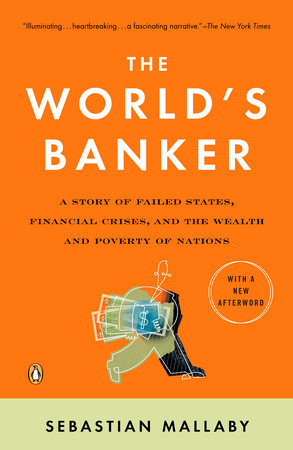
Never has the World Bank’s relief work been more important than in the last nine years, when crises as huge as AID...
Never has the World Bank’s relief work been more important than in the last nine years, when crises as huge as AIDS and the emergence of terrorist sanctuaries have threatened the prosperity of billions. This journalistic masterpiece by Washington Post columnist Sebastian Mallaby charts those controversial years at the Bank under the leadership of James Wolfensohn—the unstoppable power broker whose daring efforts to enlarge the planet’s wealth in an age of globalization and terror were matched only by the force of his polarizing personality. Based on unprecedented access to its subject, this captivating tour through the messy reality of global development is that rare triumph—an emblematic story through which a gifted author has channeled the spirit of the age. This edition features a new afterword by the author that analyzes the appointment of Paul Wolfowitz as Wolfensohn’s successor at the World bank Author:Sebastian Mallaby ISBN:9780143036791
Read more
Show less
|
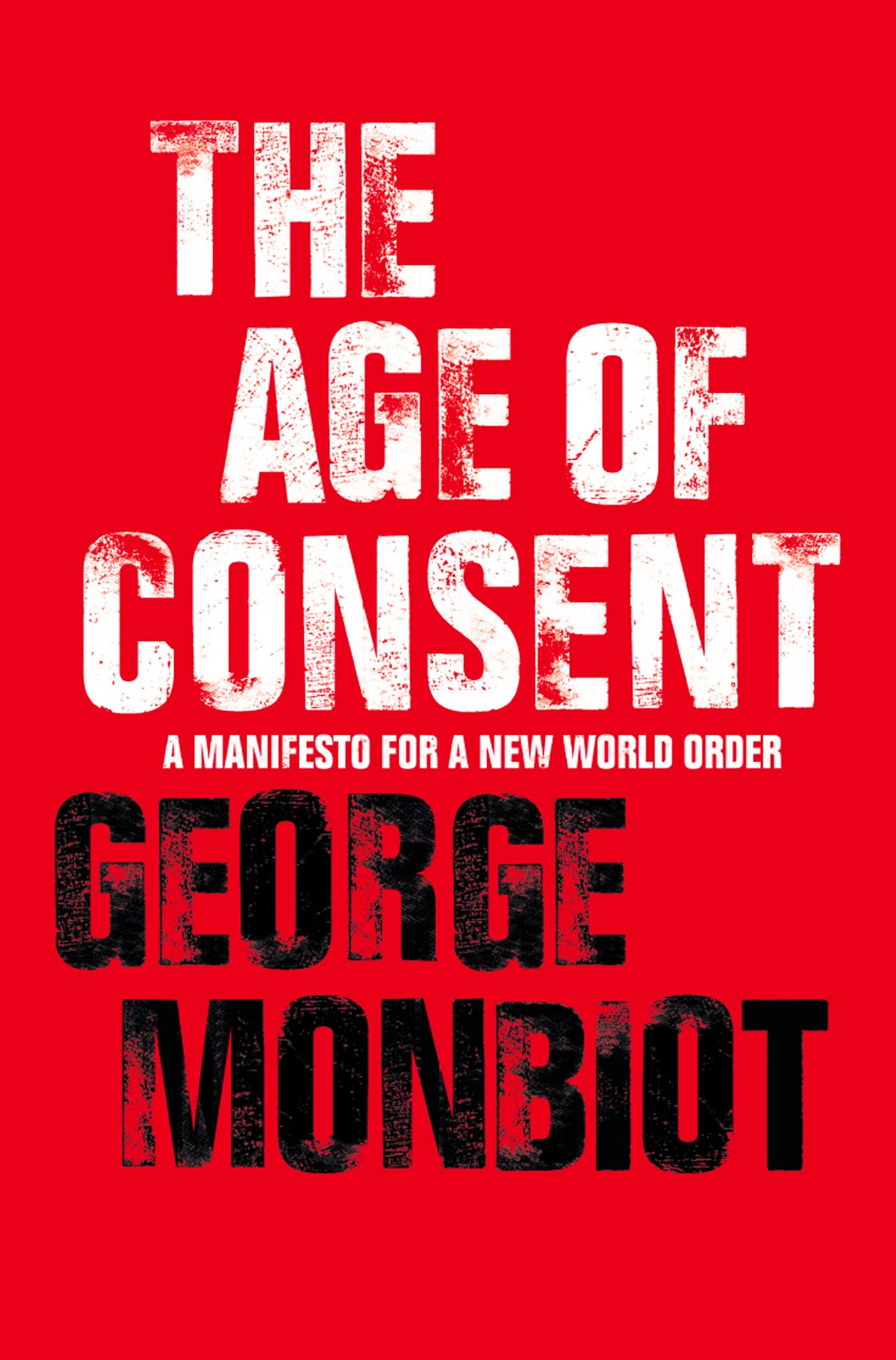
Naomi Klein's ‘No Logo’ told us what was wrong. Now, George Monbiot shows us how to put it right. Provocative, brave and...
Naomi Klein's ‘No Logo’ told us what was wrong. Now, George Monbiot shows us how to put it right. Provocative, brave and beautifully argued, ‘The Age of Consent’ is nothing less than a manifesto for a new world order. ‘Our task is not to overthrow globalisation, but to capture it, and to use it as a vehicle for humanity's first global democratic revolution.’ All over our planet, the rich get richer while the poor are overtaken by debt and disaster. The world is run not by its people but by a handful of unelected or underelected executives who make the decisions on which everyone else depends: concerning war, peace, debt, development and the balance of trade. Without democracy at the global level, the rest of us are left with no means of influencing these men but to shout abuse and hurl ourselves at the lines of police defending their gatherings and decisions. Does it have to be this way? George Monbiot knows not only that things ought to change, but also that they can change. Drawing on decades of thinking about how the world is organized and administered politically, fiscally and commercially, Monbiot has developed an interlocking set of proposals all his own, which attempts nothing less than a revolution in the way the world is run. If these proposals become popular, never again will people be able to ask of the critics of the existing world order, ‘we know what they don't want, but what do they want?’ Fiercely controversial and yet utterly persuasive, the ingenious solutions Monbiot suggests for some of the planet's most pressing problems mark him as perhaps the most realistic utopian of our time and a man whose passion is infectious and whose ideas, many will surely come to agree, are becoming irresistible. Author: George Monbiot ISBN:9780007150434
Read more
Show less
|