|
Description
|
Patrice Lumumba, first prime minister of the Republic of Congo and a pioneer of African unity, was murdered on 17 Januar...
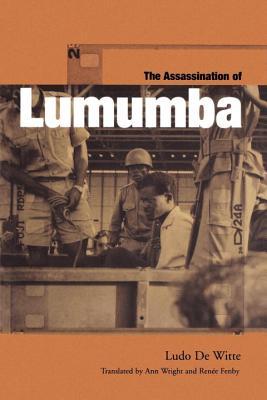
Patrice Lumumba, first prime minister of the Republic of Congo and a pioneer of African unity, was murdered on 17 January 1961. Democratically elected to lead the Mouvement National Congolais, the party he founded in 1958, Lumumba was at the centre of the country’s growing popular defiance of the colonial rule of oppression imposed by Belgium. When, in June 1960, independence was finally won, his unscheduled speech at the official ceremonies in Kinshasa received a standing ovation and made him a hero to millions. Always a threat to those who sought to maintain a covert imperialist hand over the country, however, he became within months the victim of an insidious plot and was arrested and subsequently tortured and executed. This book unravels the appalling mass of lies, hypocrisy and betrayals that have surrounded accounts of the assassination since it perpetration. Making use of a huge array of official sources as well as personal testimony from many of those in the Congo at the time, Ludo De Witte reveals a network of complicity ranging from the Belgian government to the CIA. Chilling official memos which detail ‘liquidation’ and ‘threats to national interests’ are analysed alongside macabre tales of the destruction of evidence, putting Patrice Lumumba’s personal strength and his dignified quest for African unity in stark contrast with one of the murkiest episodes in twentieth-century politics. Author: Ludo De Witte ISBN:9781859844106
Read more
Show less
|
Events in Rwanda in 1994 mark a landmark in the history of modern genocide. Up to one million people were killed in a pl...
Events in Rwanda in 1994 mark a landmark in the history of modern genocide. Up to one million people were killed in a planned public and political campaign. In the face of indisputable evidence, the Security Council of the United Nations failed to respond. In this classic of investigative journalism, Linda Melvern tells the compelling story of what happened. She holds governments to account, showing how individuals could have prevented what was happening and didn't do so. The book also reveals the unrecognised heroism of those who stayed on during the genocide, volunteer peacekeepers and those who ran emergency medical care. Fifteen years on, this new edition examines the ongoing impact of the 1948 Genocide Convention and the shock waves Rwanda caused around the world. Based on fresh interviews with key players and newly-released documents, A People Betrayed is a shocking indictment of the way Rwanda is and was forgotten and how today it is remembered in the West. Author: Linda Melvern ISBN:9781856498319
Read more
Show less
|
The people of Uganda have struggled to bury the worst of their history, but after the violent reign of Idi Amin, reminde...
The people of Uganda have struggled to bury the worst of their history, but after the violent reign of Idi Amin, reminders were never far from view. A stray clue to the 1972 disappearance of a man named Eliphaz Laki led his son to a shallow grave. From there he found the three executioners, among them Amin s chief of staff. Laki s discovery resulted in a trial that painfully gave voice to a nation s past. At once a mystery, a historical accounting, and a portrait of modern Africa, THE TEETH MAY SMILE BUT THE HEART DOES NOT FORGET is above all an exploration of how and whether the past can be laid to rest. Author: Andrew Rice ISBN:9780312429737
Read more
Show less
|
The period between the two World Wars were troubling years for colonial empire. Individuals and organizations began to c...
The period between the two World Wars were troubling years for colonial empire. Individuals and organizations began to call for major reforms and an end to white supremacy and colonial rule, contributing first to local unrest and protest and then to anticolonial activity not only in Africa but the United States and Europe as well. In this compelling history, Jonathan Derrick, a renowned scholar of Africa's past, recounts the opposition to British and French rule practiced both by Africans living on the continent and by European anticolonialists and members of the Black Diaspora. He covers campaigns waged by an early incarnation of the African National Congress and other groups in South Africa who fought against legal and other aspects of white minority rule. He also talks of the Kikuyu protests against the settler regime in Kenya; Marcus Garvey's African American movement and its role in sparking interest in Africa; the ?toile Nord Africaine, formed mainly by Algerians in France, that called for the independence of French North Africa; protests led by European critics against forced labor in Kenya and French Equatorial Africa; and the activity of small militant groups like the Ligue de D?fense de la Race N?gre (LDRN) in France and George Padmore's International African Service Bureau (IASB) in Britain. Derrick examines the role of the Comintern and Western Communist parties that were opposed to Western colonialism and ready to support militant action against it. He highlights common misunderstandings regarding the collaboration between Communists and other left-wing organizations on the one hand and African nationalists and pan-Africanists on the other, and examines the Communists' separation from Padmore, as well as the LDRN leader Garan Kouyate. He shows that, although colonial rulers greatly feared the specter of Communism in Africa, actual Communist activity was in fact quite small. Derrick reveals how, with the exception of a few colonies, anticolonial activity was easily organized, primarily because militants in Europe had the freedom to operate and create a tremendous impact. In the later 1930s, nationalist movements, fuelled by African outrage at the Italian occupation of Ethiopia, began to spread in parts of Africa. The approach and onset of the Second World War affected the rhetoric of anticolonialists, with French Communists opposing calls for independence as long as the danger of Nazism and Fascism existed, but some militants continued their anti-empire campaigns until 1939. The war then pushed colonial issues to the background, but as Derrick argues, in the long term the anticolonialists of the interwar era may have helped pave the way for later decolonization. Author: Jonathan Derrick ISBN:9781850659365
Read more
Show less
|