|
Description
|
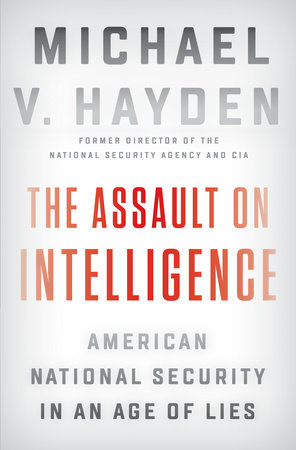
A blistering critique of the forces threatening the American intelligence community, beginning with the President of the...
A blistering critique of the forces threatening the American intelligence community, beginning with the President of the United States himself, in a time when that community's work has never been harder or more important In the face of a President who lobs accusations without facts, evidence, or logic, truth tellers are under attack. Meanwhile, the world order is teetering on the brink. North Korea is on the verge of having a nuclear weapon that could reach all of the United States, Russians have mastered a new form of information warfare that undercuts democracy, and the role of China in the global community remains unclear. There will always be value to experience and expertise, devotion to facts, humility in the face of complexity, and a respect for ideas, but in this moment they seem more important, and more endangered, than they've ever been. American Intelligence--the ultimate truth teller--has a responsibility in a post-truth world beyond merely warning of external dangers, and in The Assault on Intelligence, General Michael Hayden takes up that urgent work with profound passion, insight and authority. It is a sobering vision. The American intelligence community is more at risk than is commonly understood, for every good reason. Civil war or societal collapse is not necessarily imminent or inevitable, but our democracy's core structures, processes, and attitudes are under great stress. Many of the premises on which we have based our understanding of governance are now challenged, eroded, or simply gone. And we have a President in office who responds to overwhelming evidence from the intelligence community that the Russians are, by all acceptable standards of cyber conflict, in a state of outright war against us, not by leading a strong response, but by shooting the messenger. There are fundamental changes afoot in the world and in this country. The Assault on Intelligence shows us what they are, reveals how crippled we've become in our capacity to address them, and points toward a series of effective responses. Because when we lose our intelligence, literally and figuratively, democracy dies. Author: Michael V. Hayden ISBN:9780525558583
Read more
Show less
|
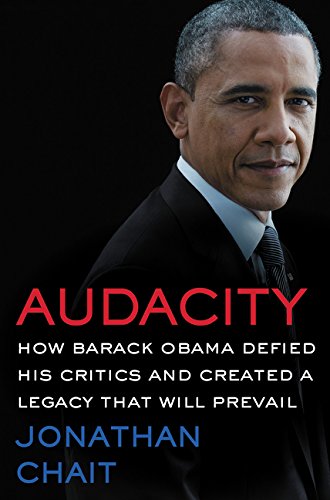
An unassailable case that, in the eyes of history, Barack Obama will be viewed as one of America’s best and most accompl...
An unassailable case that, in the eyes of history, Barack Obama will be viewed as one of America’s best and most accomplished presidents. Over the course of eight years, Barack Obama amassed an array of historic achievements. His administration saved the American economy from collapse, expanded health insurance to tens of millions who previously could not afford it, negotiated an unprecedented nuclear deal with Iran, helped craft a groundbreaking international climate accord, reined in Wall Street, launched a fundamental overhaul of our education system, and formulated a new vision of racial progress. He has done all of this despite a left that frequently disdained him as a sellout, and a hysterical right that did everything possible to destroy his agenda, even in instances when they actually agreed with what he was doing before Obama was the one doing it. Now, as the page turns to possibly the most dangerous Commander in Chief in our history, Jonathan Chait, one of America’s most incisive and meticulous political commentators, digs deep into Obama’s record on major policy fronts—the economy, the environment, domestic reform, health care, race, and foreign policy—to demonstrate why history will judge our forty-fourth president as among our greatest. Chait explains why so many observers, from cynical journalists to disheartened Democrats, missed the enormous evidence of progress amidst the smoke screen of extremist propaganda and the confinement of short-term perspective. He also reveals why Obama’s accomplishments will last despite the reactionary effort by Donald Trump and the Republicans to extinguish them. And in its resounding defense of Obama’s tenure, Audacity both makes clear his victories, and what we need to fight for next. Author: Jonathan Chait ISBN:9780062426970
Read more
Show less
|
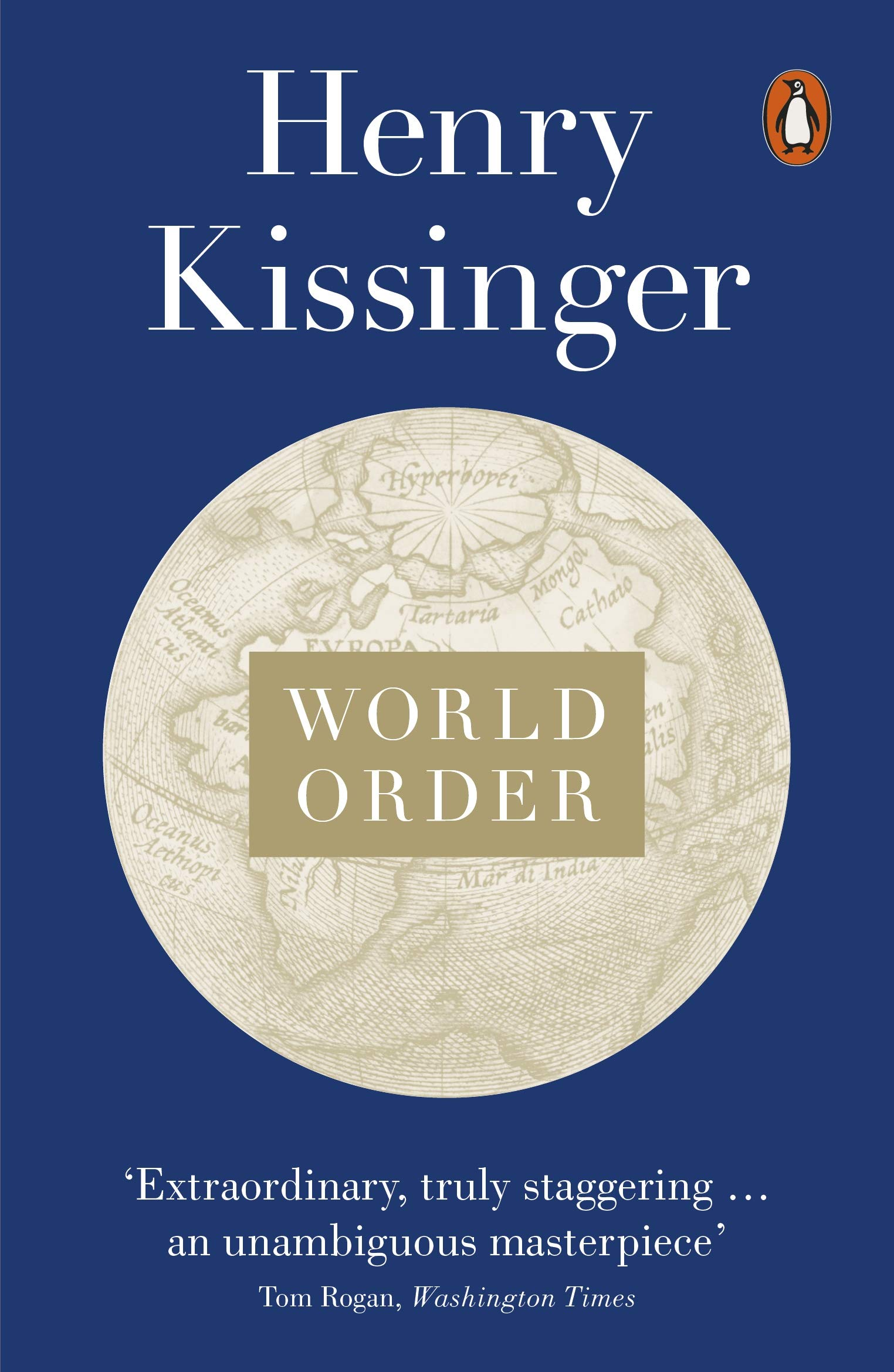
In World Order, Henry Kissinger - one of the leading practitioners of world diplomacy and author of On China - makes his...
In World Order, Henry Kissinger - one of the leading practitioners of world diplomacy and author of On China - makes his monumental investigation into the 'tectonic plates' of global history and state relations. World Order is the summation of Henry Kissinger's thinking about history, strategy and statecraft. As if taking a perspective from far above the globe, it examines the great tectonic plates of history and the motivations of nations, explaining the attitudes that states and empires have taken to the rest of the world from the formation of Europe to our own times. Kissinger identifies four great 'world orders' in history - the European, Islamic, Chinese and American. Since the end of Charlemagne's empire, and especially since the Peace of Westphalia in 1648, Europeans have striven for balance in international affairs, first in their own continent and then globally. Islamic states have looked to their destined expansion over regions populated by unbelievers, a position exemplified today by Iran under the ayatollahs. For over 2000 years the Chinese have seen 'all under Heaven' as being tributary to the Chinese Emperor. America views itself as a 'city on a hill', a beacon to the world, whose values have universal validity. How have these attitudes evolved and how have they shaped the histories of their nations, regions, and the rest of the world? What has happened when they have come into contact with each other? How have they balanced legitimacy and power at different times? What is the condition of each in our contemporary world, and how are they shaping relations between states now? To answer these questions Henry Kissinger draws upon a lifetime's historical study and unmatched experience as a world statesman. His account is shot through with observations about how historical change takes place, how some leaders shape their times and others fail to do so, and how far states can stray from the ideas which define them. World Order is a masterpiece of narrative, analysis and portraits of great historical actors that only Henry Kissinger could have written. Author: Henry Kissinger ISBN:9780141979007
Read more
Show less
|
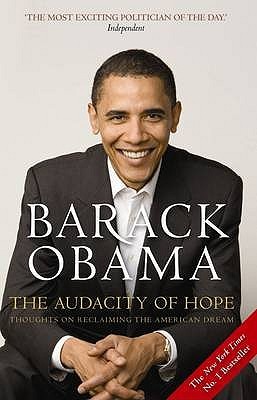
Barack Obama's first book, Dreams from My Father, was a compelling and moving memoir focusing on personal issues of race...
Barack Obama's first book, Dreams from My Father, was a compelling and moving memoir focusing on personal issues of race, identity, and community. With his second book The Audacity of Hope, Obama engages themes raised in his keynote speech at the 2004 Democratic National Convention, shares personal views on faith and values and offers a vision of the future that involves repairing a "political process that is broken" and restoring a government that has fallen out of touch with the people. Amazon.com had the opportunity to ask Senator Obama a few questions about writing, reading, and politics--see his responses below. Q: How did writing a book that you knew would be read so closely by so many compare to writing your first book, when few people knew who you were? A: In many ways, Dreams from My Father was harder to write. At that point, I wasn't even sure that I could write a book. And writing the first book really was a process of self-discovery, since it touched on my family and my childhood in a much more intimate way. On the other hand, writing The Audacity of Hope paralleled the work that I do every day--trying to give shape to all the issues that we face as a country, and providing my own personal stamp on them. Q: What is your writing process like? You have such a busy schedule, how did you find time to write? A: I'm a night owl, so I usually wrote at night after my Senate day was over, and after my family was asleep--from 9:30 p.m. or so until 1 a.m. I would work off an outline--certain themes or stories that I wanted to tell--and get them down in longhand on a yellow pad. Then I'd edit while typing in what I'd written. Q: If readers are to come away from The Audacity of Hope with one action item (a New Year's Resolution for 2007, perhaps?), what should it be? A: Get involved in an issue that you're passionate about. It almost doesn't matter what it is--improving the school system, developing strategies to wean ourselves off foreign oil, expanding health care for kids. We give too much of our power away, to the professional politicians, to the lobbyists, to cynicism. And our democracy suffers as a result. Q: You're known for being able to work with people across ideological lines. Is that possible in today's polarized Washington? A: It is possible. There are a lot of well-meaning people in both political parties. Unfortunately, the political culture tends to emphasize conflict, the media emphasizes conflict, and the structure of our campaigns rewards the negative. I write about these obstacles in chapter 4 of my book, "Politics." When you focus on solving problems instead of scoring political points, and emphasize common sense over ideology, you'd be surprised what can be accomplished. It also helps if you're willing to give other people credit--something politicians have a hard time doing sometimes. Q: How do you make people passionate about moderate and complex ideas? A: I think the country recognizes that the challenges we face aren't amenable to sound-bite solutions. People are looking for serious solutions to complex problems. I don't think we need more moderation per se--I think we should be bolder in promoting universal health care, or dealing with global warming. We just need to understand that actually solving these problems won't be easy, and that whatever solutions we come up with will require consensus among groups with divergent interests. That means everybody has to listen, and everybody has to give a little. That's not easy to do. Q: What has surprised you most about the way Washington works? A: How little serious debate and deliberation takes place on the floor of the House or the Senate. Q: You talk about how we have a personal responsibility to educate our children. What small thing can the average parent (or person) do to help improve the educational system in America? What small thing can make a big impact? A: Nothing has a bigger impact than reading to children early in life. Obviously we all have a personal obligation to turn off the TV and read to our own children; but beyond that, participating in a literacy program, working with parents who themselves may have difficulty reading, helping their children with their literacy skills, can make a huge difference in a child's life. Q: Do you ever find time to read? What kinds of books do you try to make time for? What is on your nightstand now? A: Unfortunately, I had very little time to read while I was writing. I'm trying to make up for lost time now. My tastes are pretty eclectic. I just finished Marilynne Robinson's Gilead, a wonderful book. The language just shimmers. I've started Team of Rivals by Doris Kearns Goodwin, which is a great study of Lincoln as a political strategist. I read just about anything by Toni Morrison, E.L. Doctorow, or Philip Roth. And I've got a soft spot for John le Carre. Q: What inspires you? How do you stay motivated? A: I'm inspired by the people I meet in my travels--hearing their stories, seeing the hardships they overcome, their fundamental optimism and decency. I'm inspired by the love people have for their children. And I'm inspired by my own children, how full they make my heart. They make me want to work to make the world a little bit better. And they make me want to be a better man. Author: Barack Obama ISBN:9781847670830
Read more
Show less
|