|
Description
|
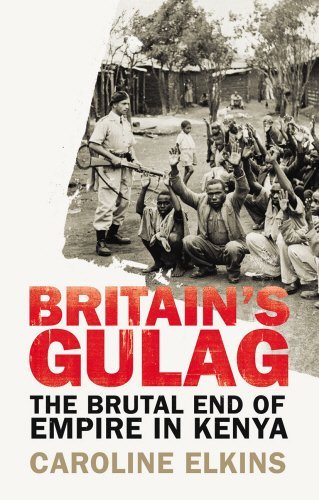
Only a few years after Britain defeated fascism came the Mau Mau uprising in Kenya – a mass armed rebellion by the Kikuy...
Only a few years after Britain defeated fascism came the Mau Mau uprising in Kenya – a mass armed rebellion by the Kikuyu people, demanding the return of their land and freedom. The draconian response of Britain’s colonial government was to detain nearly the entire Kikuyu population of 1.5 million and to portray them as sub-human savages. Detainees in their thousands –possibly a hundred thousand or more –died from exhaustion, disease, starvation and systemic physical brutality. For decades these events remained untold. Caroline Elkins conducted years of research to piece together this story, unearthing reams of documents and interviewing several hundred Kikuyu survivors. Britain’s Gulag reveals for the first time, the full savagery of the Mau Mau war and the ruthless determination with which Britain sought to control its empire. Author: Caroline Elkins ISBN: 9781847922946
Read more
Show less
|
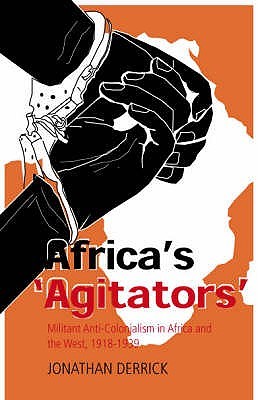
The period between the two World Wars were troubling years for colonial empire. Individuals and organizations began to c...
The period between the two World Wars were troubling years for colonial empire. Individuals and organizations began to call for major reforms and an end to white supremacy and colonial rule, contributing first to local unrest and protest and then to anticolonial activity not only in Africa but the United States and Europe as well. In this compelling history, Jonathan Derrick, a renowned scholar of Africa's past, recounts the opposition to British and French rule practiced both by Africans living on the continent and by European anticolonialists and members of the Black Diaspora. He covers campaigns waged by an early incarnation of the African National Congress and other groups in South Africa who fought against legal and other aspects of white minority rule. He also talks of the Kikuyu protests against the settler regime in Kenya; Marcus Garvey's African American movement and its role in sparking interest in Africa; the ?toile Nord Africaine, formed mainly by Algerians in France, that called for the independence of French North Africa; protests led by European critics against forced labor in Kenya and French Equatorial Africa; and the activity of small militant groups like the Ligue de D?fense de la Race N?gre (LDRN) in France and George Padmore's International African Service Bureau (IASB) in Britain. Derrick examines the role of the Comintern and Western Communist parties that were opposed to Western colonialism and ready to support militant action against it. He highlights common misunderstandings regarding the collaboration between Communists and other left-wing organizations on the one hand and African nationalists and pan-Africanists on the other, and examines the Communists' separation from Padmore, as well as the LDRN leader Garan Kouyate. He shows that, although colonial rulers greatly feared the specter of Communism in Africa, actual Communist activity was in fact quite small. Derrick reveals how, with the exception of a few colonies, anticolonial activity was easily organized, primarily because militants in Europe had the freedom to operate and create a tremendous impact. In the later 1930s, nationalist movements, fuelled by African outrage at the Italian occupation of Ethiopia, began to spread in parts of Africa. The approach and onset of the Second World War affected the rhetoric of anticolonialists, with French Communists opposing calls for independence as long as the danger of Nazism and Fascism existed, but some militants continued their anti-empire campaigns until 1939. The war then pushed colonial issues to the background, but as Derrick argues, in the long term the anticolonialists of the interwar era may have helped pave the way for later decolonization. Author: Jonathan Derrick ISBN:9781850659365
Read more
Show less
|
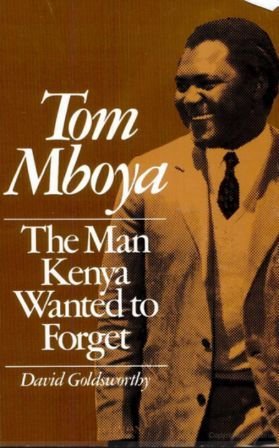
This book is a must read by all Kenyans, particularly those born after 1963. No nationalist, dynamic, intelligent and pa...
This book is a must read by all Kenyans, particularly those born after 1963. No nationalist, dynamic, intelligent and patriotic leader who can be compared to the late Thomas Joseph Mboya anywhere in Eastern Africa today. He did so much for Kenya during his short life on the earth. From Trade Unions to fighting for Kenya's Independence from the British Colonial Rule. The assassin's bullet ended his life at 39 years of age, but ordinary Kenyans will not FORGET him! Author: David Goldsworthy ISBN:9789966463678
Read more
Show less
|
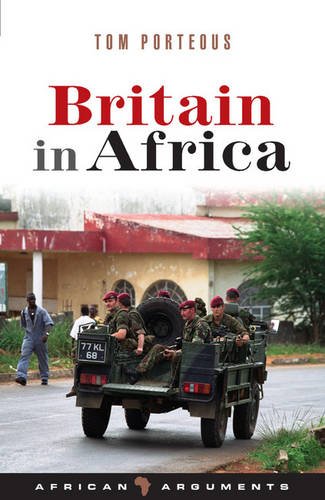
Why has Africa become such an important priority for Britain's foreign policy under New Labour? What interests and value...
Why has Africa become such an important priority for Britain's foreign policy under New Labour? What interests and values is the UK seeking to uphold by intervening? Why has aid to Africa more than tripled over the past decade? How has the UK's involvement in the War on Terror affected its efforts there? In Britain in Africa Tom Porteous seeks to answer these and other questions about Britain's role in Africa since 1997. He provides an account of the key players, the policies they constructed in the shadow of the war in Iraq and the future of Britain's engagement with the continent. This book sets out the balance sheet of what Britain has achieved, and where and why it failed in Africa. A compelling read, whose importance for international politics reaches far beyond Britain or Africa. Author: Tom Porteous ISBN:9781842779767
Read more
Show less
|
|
|
No comparison available for this listing.
Generate to see why you'd pick this one.
|
No comparison available for this listing.
Generate to see why you'd pick this one.
|
No comparison available for this listing.
Generate to see why you'd pick this one.
|
No comparison available for this listing.
Generate to see why you'd pick this one.
|