|
Description
|
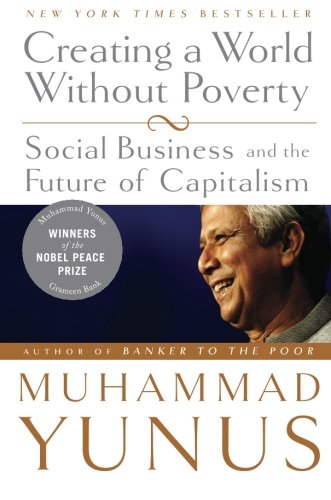
What if you harness the power of the free market to solve the problems of poverty, hunger and inequality? As founder of...
What if you harness the power of the free market to solve the problems of poverty, hunger and inequality? As founder of Grameen Bank, Nobel Peace Prize – winner Muhammad Yunus pioneered microcredit, the innovative banking program that provides poor people – mainly women –with small loans they use to launch businesses and lift their families out of poverty. In creating a World Without Poverty, Yunus goes beyond micro-credit to pioneer the idea of social business – a completely new way to use the creative vibrancy of business to tackle social problems from poverty and pollution to inadequate health care and lack of education. Yunus’s ‘’’Next Big Idea’’ offers a pioneering model for nothing less than a new, more humane form of capitalism. Author: Muhammad Yunus ISBN: 9781586486679
Read more
Show less
|
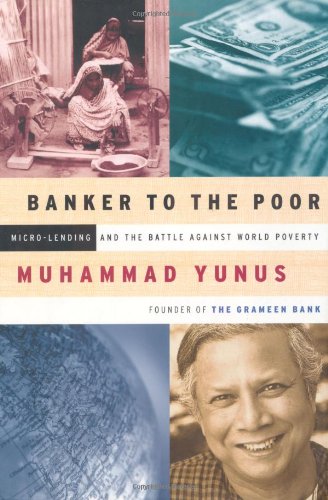
Muhammad Yunus, winner of the Nobel Peace Prize in 2006, set up the Grameen Bank in Bangladesh to lend tiny sums to the...
Muhammad Yunus, winner of the Nobel Peace Prize in 2006, set up the Grameen Bank in Bangladesh to lend tiny sums to the poorest of the poor, who were shunned by ordinary banks. The money would enable them to set up the smallest business enterprise and pull themselves out of poverty. Today, Yunus’s system of ‘micro-credit’ is practiced in some sixty countries, and his Grameen Bank is a billion-pound business acknowledged by world leaders and the World Bank as a fundamental weapon against poverty. Banker for the Poor is Yunus’s own enthralling story: of how Bangladesh’s terrible 1974 famine underlined the need to enable its victims to grow more food; of overcoming scepticism in many governments and in traditional economic thinking; and of how micro-credit unions in the West. Author: Muhammad Yunus ISBN: 9780143102915
Read more
Show less
|
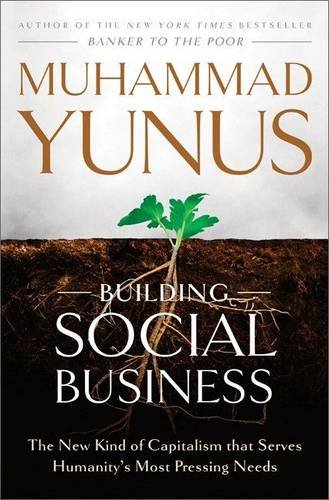
Social Business is a visionary new model for capitalism developed by Muhammad Yunus, the practical genius who pioneered...
Social Business is a visionary new model for capitalism developed by Muhammad Yunus, the practical genius who pioneered microcredit and won the Nobel Peace Prize for his efforts to combat global poverty. Now social businesses which harness the energy of capitalism to fulfil human needs rather than reward shareholders, is being adopted by leading corporations as well as entrepreneurs and social activists across Asia, South America, Europe, and the United States. Through the example of corporations such as BAS, Adidas, Danone, Uniqlo, and others, Building Social Business shows how an inspiring theory has become a world-altering practice, and offers practical guidance for those who want to create social business of their own. Author: Muhammad Yunus ISBN: 9781586489564
Read more
Show less
|
Entrepreneurs in developing countries who assume they will have the same legal, governmental, and institutional protecti...
Entrepreneurs in developing countries who assume they will have the same legal, governmental, and institutional protections as their counterparts in the West will fail. To succeed, they need to build trust within the existing structures--and this book shows how it's done. Entrepreneurial ventures often fail in the developing world because of the lack of something taken for granted in the developed world: trust. Over centuries, the developed world has built customs and institutions such as enforceable contracts, an impartial legal system, and credible regulatory bodies--and even unofficial but respected sources of information such as Yelp and Consumer Reports--that have created a high level of what scholar and entrepreneur Tarun Khanna calls "ambient trust." This is not the case in the developing world. But Khanna shows that rather than become casualties of mistrust, smart entrepreneurs can adopt the mindset that, like it or not, it's up to them to weave their own independent web of trust--with their employees, their partners, their clients, their customers, and society as a whole. This can be challenging, and it requires innovative approaches in places where the level of societal mistrust is so high that an official certification of quality simply arouses suspicion--and lowers sales! Using vivid examples from Brazil, China, India, Mexico, and elsewhere, Khanna's stories show how entrepreneurs can build on existing customs and practices instead of trying to push against them. He highlights the role new technologies can play (but cautions that these are not panaceas) and explains how entrepreneurs can find dependable partners in national and local governments to create impact at scale. As far back as the 18th century, Adam Smith recognized trust as what Khanna calls "the hidden engine of economic progress." "Frankness and openness conciliate confidence," Smith wrote. "We trust the man who seems willing to trust us." That kind of confidence is critical to entrepreneurial success, but in the developing world entrepreneurs have to establish it through their own efforts. As Khanna puts it, "The entrepreneur must not just create, she must create the conditions to create." Author: Tarun Khanna ISBN:9781523094837
Read more
Show less
|