|
Description
|
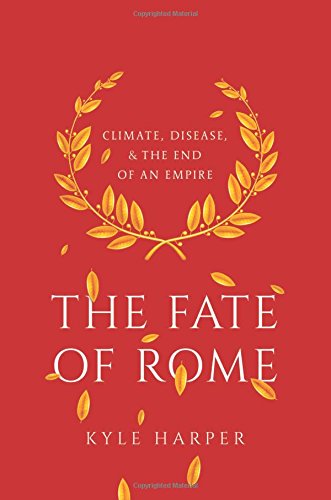
A sweeping new history of how climate change and disease helped bring down the Roman Empire Here is the monumental retel...
A sweeping new history of how climate change and disease helped bring down the Roman Empire Here is the monumental retelling of one of the most consequential chapters of human history: the fall of the Roman Empire. The Fate of Rome is the first book to examine the catastrophic role that climate change and infectious diseases played in the collapse of Rome's power--a story of nature's triumph over human ambition. Interweaving a grand historical narrative with cutting-edge climate science and genetic discoveries, Kyle Harper traces how the fate of Rome was decided not just by emperors, soldiers, and barbarians but also by volcanic eruptions, solar cycles, climate instability, and devastating viruses and bacteria. He takes readers from Rome's pinnacle in the second century, when the empire seemed an invincible superpower, to its unraveling by the seventh century, when Rome was politically fragmented and materially depleted. Harper describes how the Romans were resilient in the face of enormous environmental stress, until the besieged empire could no longer withstand the combined challenges of a "little ice age" and recurrent outbreaks of bubonic plague. A poignant reflection on humanity's intimate relationship with the environment, The Fate of Rome provides a sweeping account of how one of history's greatest civilizations encountered, endured, yet ultimately succumbed to the cumulative burden of nature's violence. The example of Rome is a timely reminder that climate change and germ evolution have shaped the world we inhabit--in ways that are surprising and profound. Author: Kyle Harper ISBN:9780691166834
Read more
Show less
|
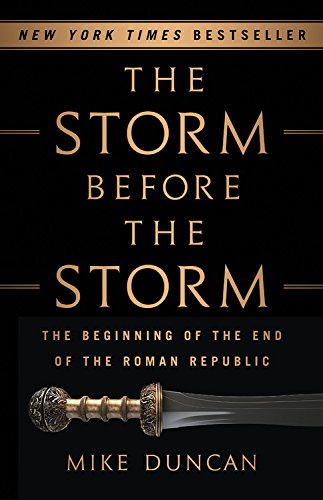
The Roman Republic was one of the most remarkable achievements in the history of civilization. After its founding in 509...
The Roman Republic was one of the most remarkable achievements in the history of civilization. After its founding in 509 BCE, Rome grew from an unremarkable Italian city-state to the dominant superpower of the Mediterranean world. Through it all, the Romans never allowed a single man to seize control of the state. Every year for four hundred years the annually elected consuls voluntarily handed power to their successors. Not once did a consul give in to the temptation to grab absolute power and refuse to let it go. It was a run of political self-denial unmatched in the history of the world. The disciplined Roman republicans then proceeded to explode out of Italy and conquer a world filled with petty tyrants, barbarian chieftains, and despotic kings. But the very success of the Republic proved to be its undoing. The republican system was unable to cope with the vast empire Rome ruled. Bankrolled by mountains of imperial wealth and without a foreign enemy to keep them united, ambitious Roman leaders began to stray from the republican austerity of their ancestors. Almost as soon as they had conquered the Mediterranean, Rome would become engulfed in violent political conflicts and civil wars that would destroy the Republic less than a century later. The Storm Before the Storm tells the story of the beginning of the end of the Roman Republic--the story of the first generation that had to cope with the dangerous new political environment made possible by Rome's unrivaled domination over the known world. The tumultuous years from 133-80 BCE set the stage for the fall of the Republic. The Republic faced issues like rising economic inequality, increasing political polarization, the privatization of the military, endemic social and ethnic prejudice, rampant corruption, ongoing military quagmires, and the ruthless ambition and unwillingness of elites to do anything to reform the system in time to save it--a situation that draws many parallels to present-day America. These issues are among the reasons why the Roman Republic would fall. And as we all know, those who do not learn from history are doomed to repeat it. Author: Mike Duncan ISBN:9781610397216
Read more
Show less
|
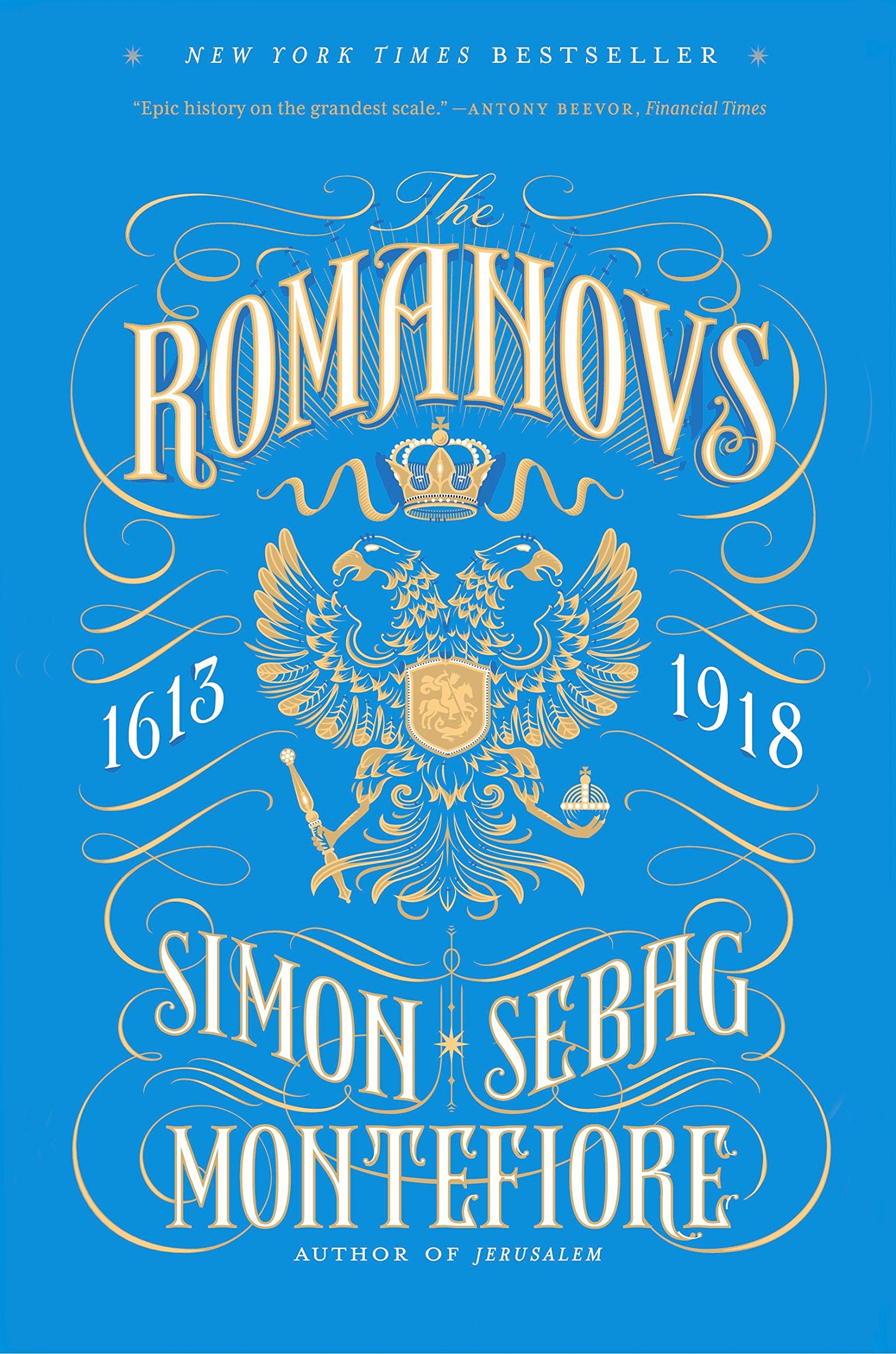
"Epic history on the grandest scale. . . . Game of Thrones seems like the proverbial vicar's tea party in comparison."--...
"Epic history on the grandest scale. . . . Game of Thrones seems like the proverbial vicar's tea party in comparison."--Financial Times The Romanovs were the most successful dynasty of modern times, ruling a sixth of the world's surface for three centuries. How did one family turn a war-ruined principality into the world's greatest empire? And how did they lose it all? This is the intimate story of twenty tsars and tsarinas, some touched by genius, some by madness, but all inspired by holy autocracy and imperial ambition. Simon Sebag Montefiore's gripping chronicle reveals their secret world of unlimited power and ruthless empire-building, overshadowed by palace conspiracy, family rivalries, sexual decadence, and wild extravagance. Drawing on new archival research, Montefiore delivers an enthralling epic of triumph and tragedy, love and murder, that is both a universal study of power and a portrait of empire that helps define Russia today. Author: Simon Sebag Montefiore ISBN:9780307280510
Read more
Show less
|
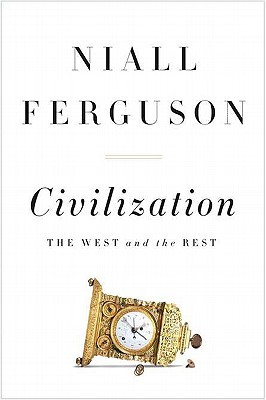
Western civilization’s rise to global dominance is the single most important historical phenomenon of the past fiv...
Western civilization’s rise to global dominance is the single most important historical phenomenon of the past five centuries. All over the world, more and more people study at Western-style universities, work for Western-style companies, vote for Western-style governments, take Western medicines, wear Western clothes, and play Western sports. Yet six hundred years ago the petty kingdoms of Western Europe seemed like miserable backwaters, ravaged by incessant war and pestilence. It was Ming China or Ottoman Turkey that had the look of world civilizations. How did the West overtake its Eastern rivals? And has the zenith of Western power now passed? In Civilization: The West and the Rest, acclaimed historian Niall Ferguson argues that, beginning in the fifteenth century, the West developed six powerful new concepts that the Rest lacked: competition, science, the rule of law, modern medicine, consumerism, and the work ethic. These were the ‘killer applications’ that allowed the West to leap ahead of the Rest; opening global trade routes, exploiting new scientific knowledge, evolving representative government, more than doubling life expectancy, unleashing the industrial revolution, and hugely increasing human productivity. Civilization shows exactly how a dozen Western empires came to control three-fifths of mankind and four-fifths of the world economy. Yet now, Ferguson argues, the days of Western predominance are numbered because the Rest have finally downloaded the six killer apps the West once monopolized – while the West has literally lost faith in itself. Chronicling the rise and fall of empires alongside the clashes of civilizations, Civilization recasts world history with verve and wit. Boldly argued but also teeming with memorable characters, this is Ferguson at his very best. Author: Niall Ferguson ISBN:9780141987934
Read more
Show less
|