|
Description
|
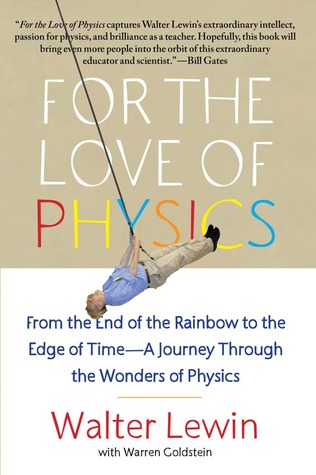
In For the Love of Physics, beloved MIT professor Walter Lewin, whose riveting physics lectures made him a YouTube super...
In For the Love of Physics, beloved MIT professor Walter Lewin, whose riveting physics lectures made him a YouTube super-star, takes readers on a remarkably fun, inventive, and often wacky journey that brings the joys of physics to life. “For the Love of Physics captures Walter Lewin’s extraordinary intellect, passion for physics, and brilliance as a teacher”—Bill Gates. For more than thirty years as a renowned professor at the Massachusetts Institute of Technology, Lewin’s lectures made physics not only accessible but fun, whether putting his head in the path of a wrecking ball, supercharging himself with three hundred thousand volts of electricity, or demonstrating why the sky is blue and clouds are white. In For the Love of Physics, Lewin takes readers on a marvelous journey, opening our eyes as never before to the wonders of physics and its amazing ability to reveal the beauty and power embedded in our world. Could it be true that we are shorter standing up than lying down? Why can we snorkel no deeper than about one foot below the surface? Why are the colors of a rainbow always in the same order, can we stretch a hand out and touch one? Using superbly clear and simple explanations of phenomena we’ve always wondered about, such as what the big bang would have sounded like had anyone existed to hear it, Lewin surprises and delights with physics-based answers to even the most elusive questions. Whether showing us that a flea is strong enough to pull a heavy book across a table, or describing the coolest, weirdest facts about the tiniest bits of matter, Lewin always entertains as he edifies. “For me,” Lewin writes, “physics is a way of seeing—the spectacular and the mundane, the immense and the minute—as a beautiful, thrillingly interwoven whole.” For the Love of Physics is a rare gem that will change the way readers see the world. Author: Walter Lewin ISBN:9781451607130
Read more
Show less
|
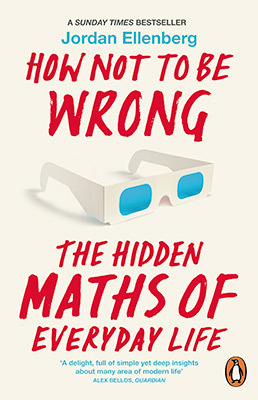
The Freakonomics of math—a math-world superstar unveils the hidden beauty and logic of the world and puts its power in o...
The Freakonomics of math—a math-world superstar unveils the hidden beauty and logic of the world and puts its power in our hands The math we learn in school can seem like a dull set of rules, laid down by the ancients and not to be questioned. In How Not to Be Wrong, Jordan Ellenberg shows us how terribly limiting this view is: Math isn’t confined to abstract incidents that never occur in real life, but rather touches everything we do—the whole world is shot through with it. Math allows us to see the hidden structures underneath the messy and chaotic surface of our world. It’s a science of not being wrong, hammered out by centuries of hard work and argument. Armed with the tools of mathematics, we can see through to the true meaning of information we take for granted: How early should you get to the airport? What does “public opinion” really represent? Why do tall parents have shorter children? Who really won Florida in 2000? And how likely are you, really, to develop cancer? How Not to Be Wrong presents the surprising revelations behind all of these questions and many more, using the mathematician’s method of analyzing life and exposing the hard-won insights of the academic community to the layman—minus the jargon. Ellenberg chases mathematical threads through a vast range of time and space, from the everyday to the cosmic, encountering, among other things, baseball, Reaganomics, daring lottery schemes, Voltaire, the replicability crisis in psychology, Italian Renaissance painting, artificial languages, the development of non-Euclidean geometry, the coming obesity apocalypse, Antonin Scalia’s views on crime and punishment, the psychology of slime molds, what Facebook can and can’t figure out about you, and the existence of God. Ellenberg pulls from history as well as from the latest theoretical developments to provide those not trained in math with the knowledge they need. Math, as Ellenberg says, is “an atomic-powered prosthesis that you attach to your common sense, vastly multiplying its reach and strength.” With the tools of mathematics in hand, you can understand the world in a deeper, more meaningful way. How Not to Be Wrong will show you how. Author: Jordan Ellenberg ISBN:9780718196042
Read more
Show less
|
In Wonders of Life: Exploring the Most Extraordinary Force in the Universe, the definitive companion to the Discovery Sc...
In Wonders of Life: Exploring the Most Extraordinary Force in the Universe, the definitive companion to the Discovery Science Channel series, Professor Brian Cox takes us on an incredible journey to discover the most complex, diverse, and unique force in the universe: life itself. Through his voyage of discovery, international bestselling author Brian Cox explains how the astonishing inventiveness of nature came about and uncovers the milestones in the epic journey from the origin of life to our own lives, with beautiful full-color illustrations throughout. From spectacular fountains of superheated water at the bottom of the Atlantic to the deepest rainforest, Cox seeks out the places where the biggest questions about life may be answered: What is life? Why do we need water? Why does life end? Physicist and professor Brian Cox uncovers the secrets of life in the most unexpected locations and in the most stunning detail in this beautiful full-color volume. Author: Brian Cox ISBN:9780062238832
Read more
Show less
|
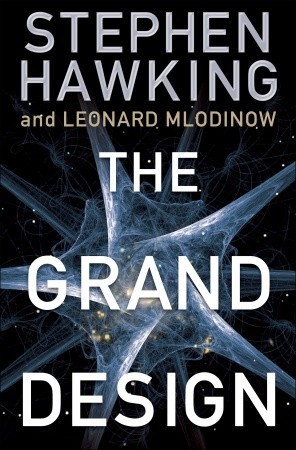
When and how did the universe begin? Why are we here? Why is there something rather than nothing? What is the nature of...
When and how did the universe begin? Why are we here? Why is there something rather than nothing? What is the nature of reality? Why are the laws of nature so finely tuned as to allow for the existence of beings like ourselves? And, finally, is the apparent “grand design” of our universe evidence of a benevolent creator who set things in motion—or does science offer another explanation? The most fundamental questions about the origins of the universe and of life itself, once the province of philosophy, now occupy the territory where scientists, philosophers, and theologians meet—if only to disagree. In their new book, Stephen Hawking and Leonard Mlodinow present the most recent scientific thinking about the mysteries of the universe, in nontechnical language marked by both brilliance and simplicity. In The Grand Design they explain that according to quantum theory, the cosmos does not have just a single existence or history, but rather that every possible history of the universe exists simultaneously. When applied to the universe as a whole, this idea calls into question the very notion of cause and effect. But the “top-down” approach to cosmology that Hawking and Mlodinow describe would say that the fact that the past takes no definite form means that we create history by observing it, rather than that history creates us. The authors further explain that we ourselves are the product of quantum fluctuations in the very early universe, and show how quantum theory predicts the “multiverse”—the idea that ours is just one of many universes that appeared spontaneously out of nothing, each with different laws of nature. Along the way Hawking and Mlodinow question the conventional concept of reality, posing a “model-dependent” theory of reality as the best we can hope to find. And they conclude with a riveting assessment of M-theory, an explanation of the laws governing us and our universe that is currently the only viable candidate for a complete “theory of everything.” If confirmed, they write, it will be the unified theory that Einstein was looking for, and the ultimate triumph of human reason. A succinct, startling, and lavishly illustrated guide to discoveries that are altering our understanding and threatening some of our most cherished belief systems, The Grand Design is a book that will inform—and provoke—like no other. Author: Stephen Hawking and Leonard Mlodinow ISBN:9780553819229
Read more
Show less
|