|
Description
|
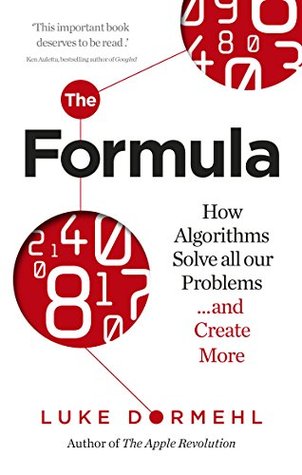
What if everything in life could be reduced to a simple formula? What if numbers were able to tell us which partners we...
What if everything in life could be reduced to a simple formula? What if numbers were able to tell us which partners we were best matched with – not just in terms of attractiveness, but for a long-term committed marriage? Or if they could say which films would be the biggest hits at the box office, and what changes could be made to those films to make them even more successful? Or even who out of us is likely to commit certain crimes, and when? This may sound like the world of science-fiction, but in fact it is just the tip of the iceberg in a world that is increasingly ruled by complex algorithms and neural networks. In The Formula, Luke Dormehl takes you inside the world of numbers, asking how we came to believe in the all-conquering power of algorithms; introducing the mathematicians, artificial intelligence experts and Silicon Valley entrepreneurs who are shaping this brave new world, and ultimately asking how we survive in an era where numbers can sometimes seem to create as many problems as they solve. Author: Luke Dormehl ISBN:9780753541708
Read more
Show less
|
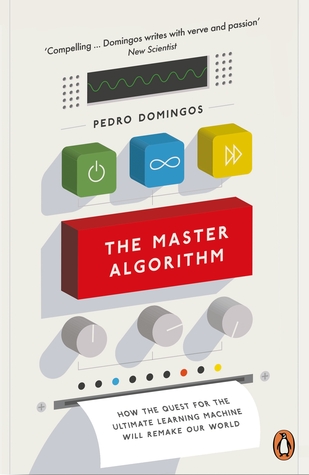
'Pedro Domingos demystifies machine learning and shows how wondrous and exciting the future will be' Walter Isaacson, au...
'Pedro Domingos demystifies machine learning and shows how wondrous and exciting the future will be' Walter Isaacson, author of Steve Jobs Society is changing, one learning algorithm at a time, from search engines to online dating, personalized medicine to predicting the stock market. But learning algorithms are not just about Big Data - these algorithms take raw data and make it useful by creating more algorithms. This is something new under the sun: a technology that builds itself. In The Master Algorithm, Pedro Domingos reveals how machine learning is remaking business, politics, science and war. And he takes us on an awe-inspiring quest to find 'The Master Algorithm' - a universal learner capable of deriving all knowledge from data. Author: Pedro Domingos ISBN:9780141979243
Read more
Show less
|
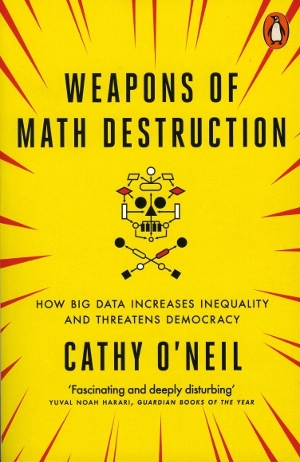
New York Times Bestseller 'Fascinating and deeply disturbing' - Yuval Noah Harari, Guardian Books of the Year 'A manual...
New York Times Bestseller 'Fascinating and deeply disturbing' - Yuval Noah Harari, Guardian Books of the Year 'A manual for the 21st-century citizen... accessible, refreshingly critical, relevant and urgent' - Federica Cocco, Financial Times A former Wall Street quant sounds an alarm on the mathematical models that pervade modern life - and threaten to rip apart our social fabric We live in the age of the algorithm. Increasingly, the decisions that affect our lives - where we go to school, whether we get a loan, how much we pay for insurance - are being made not by humans, but by mathematical models. In theory, this should lead to greater fairness: everyone is judged according to the same rules, and bias is eliminated. And yet, as Cathy O'Neil reveals in this urgent and necessary book, the opposite is true. The models being used today are opaque, unregulated, and incontestable, even when they're wrong. Most troubling, they reinforce discrimination. Tracing the arc of a person's life, O'Neil exposes the black box models that shape our future, both as individuals and as a society. These "weapons of math destruction" score teachers and students, sort CVs, grant or deny loans, evaluate workers, target voters, and monitor our health. O'Neil calls on modellers to take more responsibility for their algorithms and on policy makers to regulate their use. But in the end, it's up to us to become more savvy about the models that govern our lives. This important book empowers us to ask the tough questions, uncover the truth, and demand change. Author: Cathy O'Neil ISBN:9780141985411
Read more
Show less
|
The Freakonomics of math—a math-world superstar unveils the hidden beauty and logic of the world and puts its power in o...
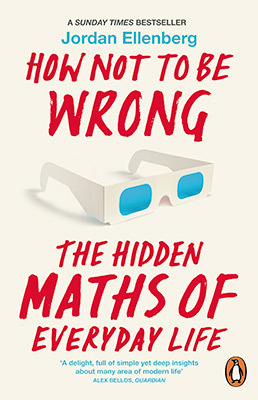
The Freakonomics of math—a math-world superstar unveils the hidden beauty and logic of the world and puts its power in our hands The math we learn in school can seem like a dull set of rules, laid down by the ancients and not to be questioned. In How Not to Be Wrong, Jordan Ellenberg shows us how terribly limiting this view is: Math isn’t confined to abstract incidents that never occur in real life, but rather touches everything we do—the whole world is shot through with it. Math allows us to see the hidden structures underneath the messy and chaotic surface of our world. It’s a science of not being wrong, hammered out by centuries of hard work and argument. Armed with the tools of mathematics, we can see through to the true meaning of information we take for granted: How early should you get to the airport? What does “public opinion” really represent? Why do tall parents have shorter children? Who really won Florida in 2000? And how likely are you, really, to develop cancer? How Not to Be Wrong presents the surprising revelations behind all of these questions and many more, using the mathematician’s method of analyzing life and exposing the hard-won insights of the academic community to the layman—minus the jargon. Ellenberg chases mathematical threads through a vast range of time and space, from the everyday to the cosmic, encountering, among other things, baseball, Reaganomics, daring lottery schemes, Voltaire, the replicability crisis in psychology, Italian Renaissance painting, artificial languages, the development of non-Euclidean geometry, the coming obesity apocalypse, Antonin Scalia’s views on crime and punishment, the psychology of slime molds, what Facebook can and can’t figure out about you, and the existence of God. Ellenberg pulls from history as well as from the latest theoretical developments to provide those not trained in math with the knowledge they need. Math, as Ellenberg says, is “an atomic-powered prosthesis that you attach to your common sense, vastly multiplying its reach and strength.” With the tools of mathematics in hand, you can understand the world in a deeper, more meaningful way. How Not to Be Wrong will show you how. Author: Jordan Ellenberg ISBN:9780718196042
Read more
Show less
|