|
Description
|
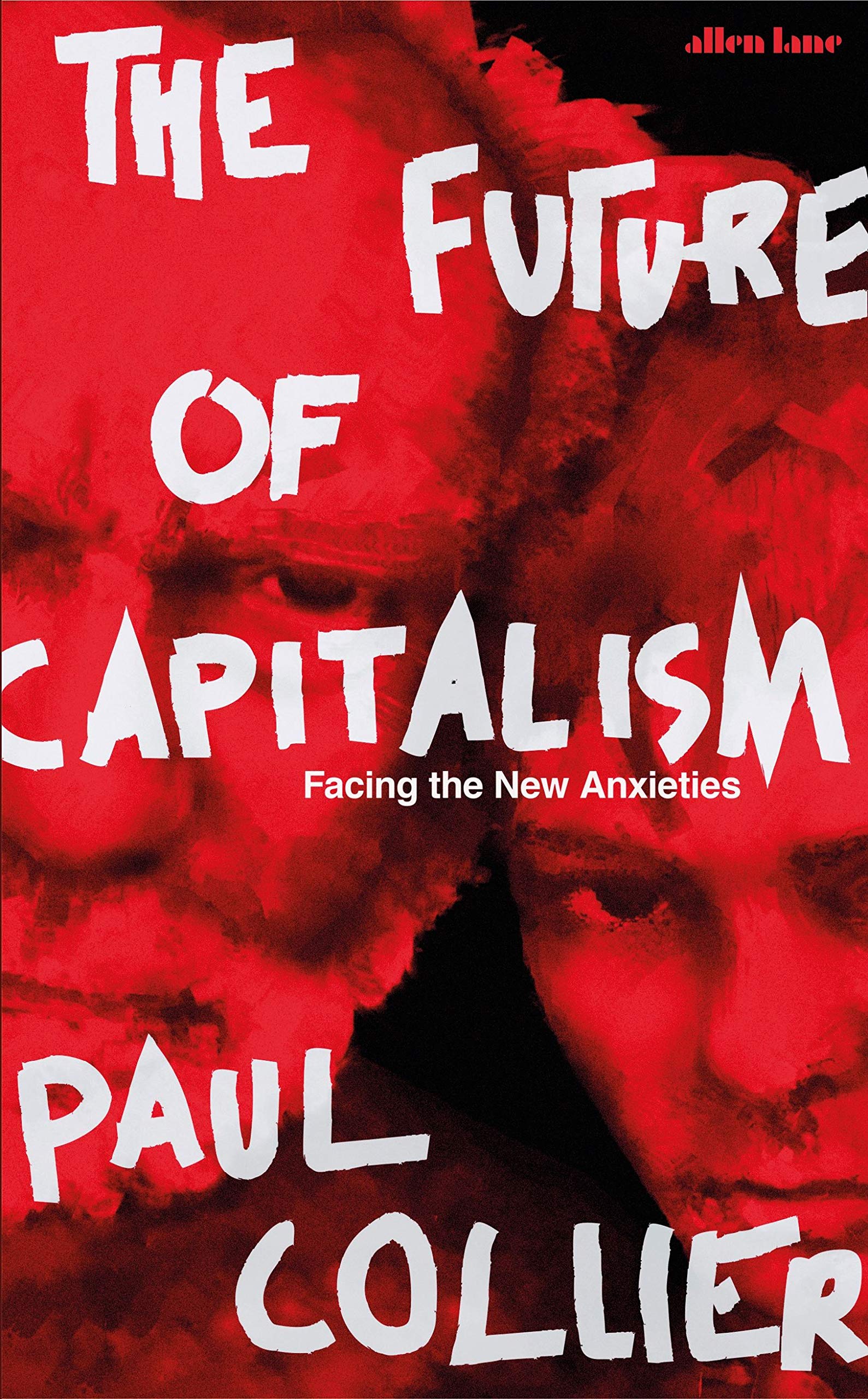
Deep new rifts are tearing apart the fabric of Britain and other Western societies: thriving cities versus the provinces...
Deep new rifts are tearing apart the fabric of Britain and other Western societies: thriving cities versus the provinces, the highly skilled elite versus the less educated, wealthy versus developing countries. As these divides deepen, we have lost the sense of ethical obligation to others that was crucial to the rise of post-war social democracy. So far these rifts have been answered only by the revivalist ideologies of populism and socialism, leading to the seismic upheavals of Trump, Brexit and the return of the far right in Germany. We have heard many critiques of capitalism but no one has laid out a realistic way to fix it, until now. In a passionate and polemical book, celebrated economist Paul Collier outlines brilliantly original and ethical ways of healing these rifts - economic, social and cultural - with the cool head of pragmatism, rather than the fervour of ideological revivalism. He reveals how he has personally lived across these three divides, moving from working-class Sheffield to hyper-competitive Oxford, and working between Britain and Africa, and acknowledges some of the failings of his profession. Drawing on his own solutions as well as ideas from some of the world's most distinguished social scientists, he shows us how to save capitalism from itself - and free ourselves from the intellectual baggage of the 20th century. Author: Paul Collier ISBN:9780241333884
Read more
Show less
|
Throughout the Western world, governments and financial elites responded to the financial crisis of 2008 by trying to re...
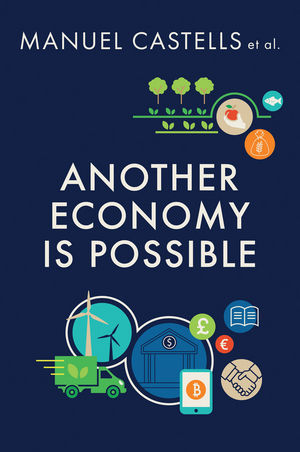
Throughout the Western world, governments and financial elites responded to the financial crisis of 2008 by trying to restore the conditions of business as usual, but the economic, social and human damage inflicted by the crisis has given rise to a reconsideration of the inevitability of unfettered capitalism as a fact of life. A number of economic practices and organizations emerged in Europe and the United States that embodied alternative values: the value of life over the value of money; the effectiveness of cooperation over cut-throat competition; the social responsibility of corporations and responsible regulation by governments over the short-term speculative strategies that brought the economy to the brink of catastrophe. This book examines the blossoming of innovative new experiments in organizing work and life that emerged in the wake of the financial crisis: cooperatives, barter networks, ethical banking, community currencies, shared time banks, solidarity networks, sharing of goods, non-monetary transactions, etc., experiments that paved the way for the emergence of a sharing economy in all domains of activity oriented toward the satisfaction of human needs. Other innovations included the creation of cryptographic virtual currencies, epitomized by bitcoin, which blended a libertarian, entrepreneurial spirit with information technology to provide an alternative to standard forms of currency. On the basis of a cross-cultural analysis of alternative economic practices, this book develops an important theoretical argument: that the economy, as a human practice, is shaped by culture, and that the diversity of cultures, as revealed in a time of crisis, implies the possibility of different economies depending on the values and power relations that define economic institutions. This book will be of great interest to students and scholars in sociology, economics and the social sciences generally, and to anyone who wishes to understand how our societies and economies are changing today. (less) Author: Manuel Castlells ISBN:9781509517213
Read more
Show less
|
Why has inequality increased in the Western world - and what can we do about it? In The Great Divide, Joseph E. Stiglitz...
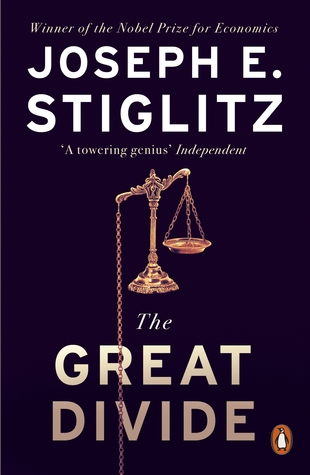
Why has inequality increased in the Western world - and what can we do about it? In The Great Divide, Joseph E. Stiglitz expands on the diagnosis he offered in his best-selling book The Price of Inequality and suggests ways to counter this growing problem. With his characteristic blend of clarity and passion, Stiglitz argues that inequality is a choice - the cumulative result of unjust policies and misguided priorities. In these essays, articles and reflections, Stiglitz fully exposes the inequality - from its dimensions and its causes to its consequences for the world - that is afflicting America and other Western countries in thrall to neoliberalism. From Reagan-era policies to the Great Recession and its long aftermath, Stiglitz delves into the processes and irresponsible policies - deregulation, tax cuts for the rich, the corruption of the political process - that are leaving many people further and further behind and turning the dream of a socially mobile society into an ever more unachievable myth. With formidable yet accessible economic insight, he urges us to embrace real solutions: increasing taxes on corporations and the wealthy; investing in education, science, and infrastructure; helping homeowners instead of banks; and, most importantly, doing more to restore the economy to full employment. Stiglitz's analysis reaches beyond America - the inequality leader of the developed world - to draw lessons from Scandinavia, Singapore, and Japan, and he argues against the tide of unnecessary, destructive austerity that is sweeping across Europe. Ultimately, Stiglitz believes our choice is not between growth and fairness; with the right policies, we can choose both. Author: Joseph Stiglitz ISBN:9780141981222
Read more
Show less
|
Based on the series produced for the BBC World Service Who thought up paper money? How did the contraceptive pill change...
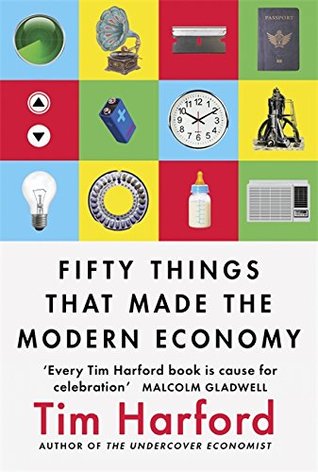
Based on the series produced for the BBC World Service Who thought up paper money? How did the contraceptive pill change the face of the legal profession? Why was the horse collar as important for human progress as the steam engine? How did the humble spreadsheet turn the world of finance upside-down? The world economy defies comprehension. A continuously-changing system of immense complexity, it offers over ten billion distinct products and services, doubles in size every fifteen years, and links almost every one of the planet's seven billion people. It delivers astonishing luxury to hundreds of millions. It also leaves hundreds of millions behind, puts tremendous strains on the ecosystem, and has an alarming habit of stalling. Nobody is in charge of it. Indeed, no individual understands more than a fraction of what's going on. How can we make sense of this bewildering system on which our lives depend? From the tally-stick to Bitcoin, the canal lock to the jumbo jet, each invention in Tim Harford's fascinating new book has its own curious, surprising and memorable story, a vignette against a grand backdrop. Step by step, readers will start to understand where we are, how we got here, and where we might be going next. Hidden connections will be laid bare: how the barcode undermined family corner shops; why the gramophone widened inequality; how barbed wire shaped America. We'll meet the characters who developed some of these inventions, profited from them, or were ruined by them. We'll trace the economic principles that help to explain their transformative effects. And we'll ask what lessons we can learn to make wise use of future inventions, in a world where the pace of innovation will only accelerate. Author: Tim Harford ISBN:9781408709115
Read more
Show less
|