|
Description
|
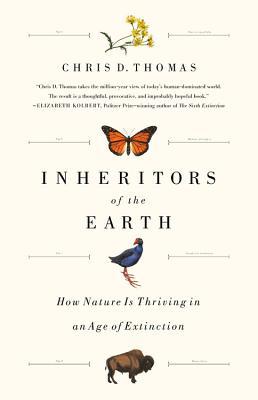
Human activity has irreversibly changed the natural environment. But the news isn't all bad. It's accepted wisdom today...
Human activity has irreversibly changed the natural environment. But the news isn't all bad. It's accepted wisdom today that human beings have permanently damaged the natural world, causing extinction, deforestation, pollution, and of course climate change. But in Inheritors of the Earth, biologist Chris Thomas shows that this obscures a more hopeful truth--we're also helping nature grow and change. Human cities and mass agriculture have created new places for enterprising animals and plants to live, and our activities have stimulated evolutionary change in virtually every population of living species. Most remarkably, Thomas shows, humans may well have raised the rate at which new species are formed to the highest level in the history of our planet. Drawing on the success stories of diverse species, from the ochre-colored comma butterfly to the New Zealand pukeko, Thomas overturns the accepted story of declining biodiversity on Earth. In so doing, he questions why we resist new forms of life, and why we see ourselves as unnatural. Ultimately, he suggests that if life on Earth can recover from the asteroid that killed off the dinosaurs, it can survive the onslaughts of the technological age. This eye-opening book is a profound reexamination of the relationship between humanity and the natural world. Author: Chris D. Mathews ISBN:9781610397278
Read more
Show less
|
Over the last half-billion years, there have been five mass extinctions, when the diversity of life on earth suddenly an...
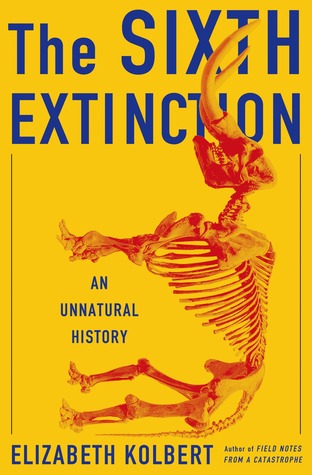
Over the last half-billion years, there have been five mass extinctions, when the diversity of life on earth suddenly and dramatically contracted. Scientists around the world are currently monitoring the sixth extinction, predicted to be the most devastating extinction event since the asteroid impact that wiped out the dinosaurs. This time around, the cataclysm is us. In prose that is at once frank, entertaining, and deeply informed, The New Yorker writer Elizabeth Kolbert tells us why and how human beings have altered life on the planet in a way no species has before. Interweaving research in half a dozen disciplines, descriptions of the fascinating species that have already been lost, and the history of extinction as a concept, Kolbert provides a moving and comprehensive account of the disappearances occurring before our very eyes. She shows that the sixth extinction is likely to be mankind's most lasting legacy, compelling us to rethink the fundamental question of what it means to be human. Author: Elizabeth Kolbert ISBN:9781408851241
Read more
Show less
|
Charles Darwin’s masterpiece, On the Origin of Species, shook society to its core on publication in 1859. Darwin was onl...
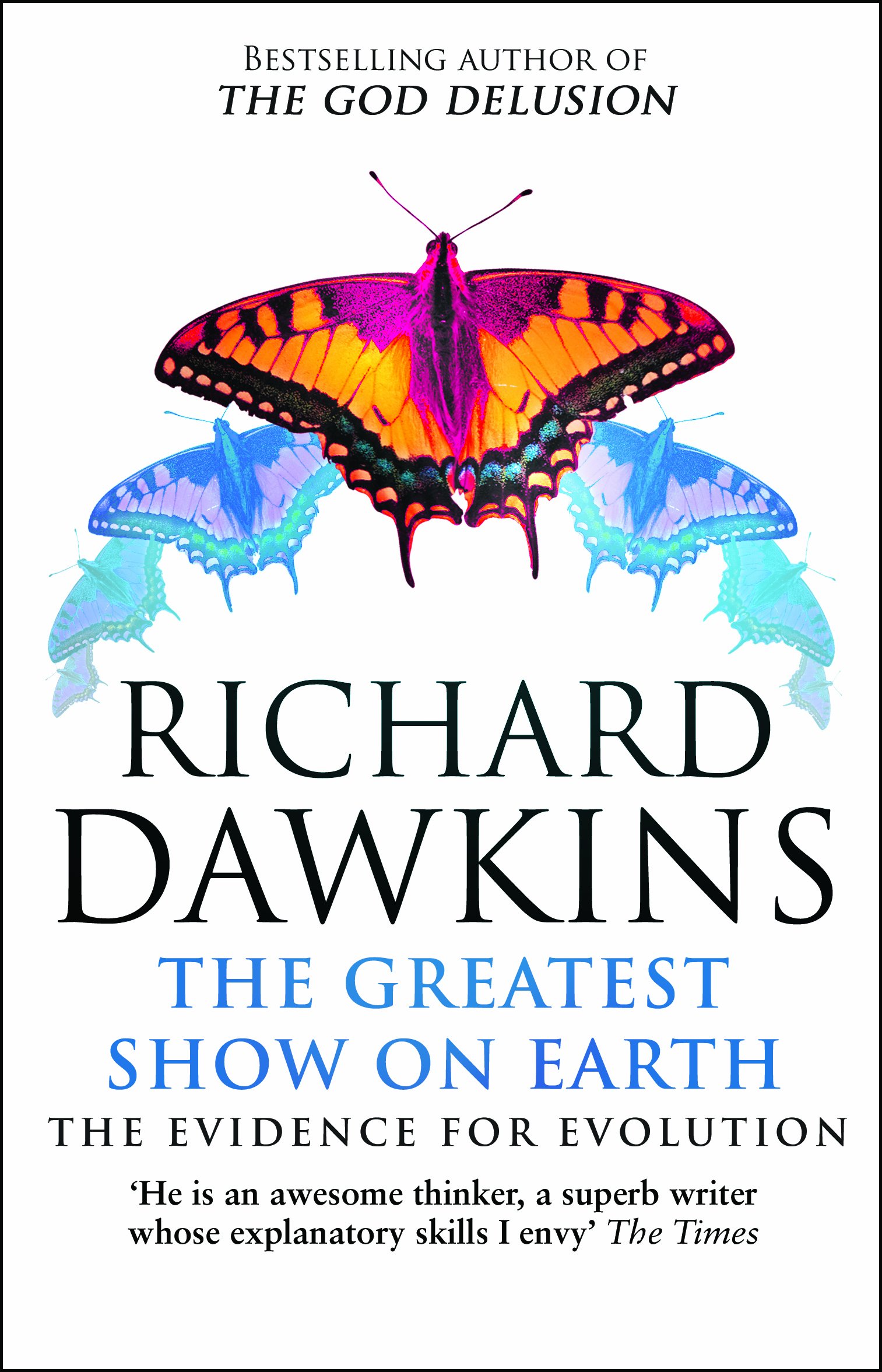
Charles Darwin’s masterpiece, On the Origin of Species, shook society to its core on publication in 1859. Darwin was only too aware of the storm his theory of evolution would provoke but he would surely have raised an incredulous eyebrow at the controversy still raging a century and a half later. Evolution is accepted as scientific fact by all reputable scientists and indeed theologians, yet millions of people continue to question its veracity. In The Greatest Show on Earth Richard Dawkins takes on creationists, including followers of ‘Intelligent Design’ and all those who question the fact of evolution through natural selection. Like a detective arriving on the scene of a crime, he sifts through fascinating layers of scientific facts and disciplines to build a cast-iron case: from the living examples of natural selection in birds and insects; the ‘time clocks’ of trees and radioactive dating that calibrate a timescale for evolution; the fossil record and the traces of our earliest ancestors; to confirmation from molecular biology and genetics. All of this, and much more, bears witness to the truth of evolution. The Greatest Show on Earth comes at a critical time: systematic opposition to the fact of evolution is now flourishing as never before, especially in America. In Britain and elsewhere in the world, teachers witness insidious attempts to undermine the status of science in their classrooms. Richard Dawkins provides unequivocal evidence that boldly and comprehensively rebuts such nonsense. At the same time he shares with us his palpable love of the natural world and the essential role that science plays in its interpretation. Written with elegance, wit and passion, it is hard-hitting, absorbing and totally convincing. Author: Richard Dawkins ISBN:9780552775243
Read more
Show less
|
When Edwin Hubble looked into his telescope in the 1920s, he was shocked to find that nearly all of the galaxies he coul...
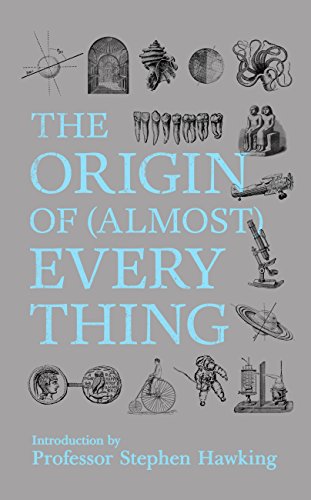
When Edwin Hubble looked into his telescope in the 1920s, he was shocked to find that nearly all of the galaxies he could see through it were flying away from one another. If these galaxies had always been travelling, he reasoned, then they must, at some point, have been on top of one another. This discovery transformed the debate about one of the most fundamental questions of human existence - how did the universe begin? Every society has stories about the origin of the cosmos and its inhabitants, but now, with the power to peer into the early universe and deploy the knowledge gleaned from archaeology, geology, evolutionary biology and cosmology, we are closer than ever to understanding where it all came from. In The Origin of (almost) Everything, New Scientist explores the modern origin stories of everything from the Big Bang, meteorites and dark energy, to dinosaurs, civilisation, timekeeping, belly-button fluff and beyond. From how complex life evolved on Earth, to the first written language, to how humans conquered space, The Origin of (almost) Everything offers a unique history of the past, present and future of our universe. Author: Stephen Hawking ISBN:9781473629356
Read more
Show less
|