|
Description
|
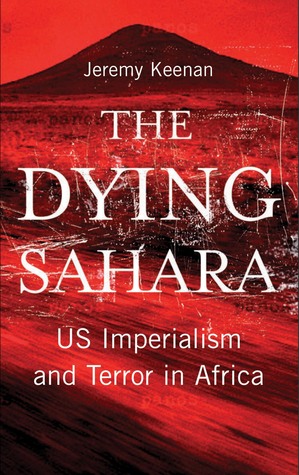
collusion between the US and Algeria in fabricating terrorism to justify a new ‘Saharan front’ in Washington...
collusion between the US and Algeria in fabricating terrorism to justify a new ‘Saharan front’ in Washington’s War on Terror. Now, in The Dying Sahara, he reveals how the designation of the region as a ‘Terror Zone’ has destroyed the lives and livelihoods of thousands of innocent people. Beginning in 2004, with what local people called the US ‘invasion’ of the Sahel, The Dying Sahara shows how repressive, authoritarian regimes - cashing in on US terrorism ‘rents’ - provoked Tuareg rebellions in both Niger and Mali. Further, he argues that US activity has unleashed a new, narco-trafficking branch of Al-Qaeda. Keenan's chillingly detailed research shows that the US and its new combatant African command (AFRICOM) have created instability in a region the size of western Europe. Author: Jeffrey Keenan ISBN:9780745329611
Read more
Show less
|
A fascinating examination of the efforts by international jihadists to bring about their grand vision of Islamist hegemo...
A fascinating examination of the efforts by international jihadists to bring about their grand vision of Islamist hegemony in the greater Horn of Africa region, which began with the collaboration between Al Qaeda and the National Islamic Front government of Sudan. Dr Pirio demonstrates how a faction within Somalia's Islamic Courts movement with historic ties to Al Qaeda came to dominate the Islamic Court's movement and threaten wider regional insecurity and the expansion of the Middle East conflict into Africa. Author: Gregory Alonso Pirio ISBN:9781569022788
Read more
Show less
|
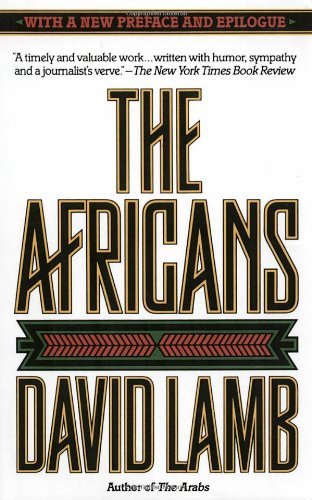
During the four years he spent in black Africa as the bureau chief for the Los Angeles Times, David Lamb traveled throug...
During the four years he spent in black Africa as the bureau chief for the Los Angeles Times, David Lamb traveled through almost every country south of the Sahara, logging more than 300,000 miles. He talked to presidents and guerrilla leaders, university professors and witch doctors. He bounced from wars to coups oceans apart, catching midnight flights to little-known countries where supposedly decent people were doing unspeakable things to one another. In the tradition of John Gunther’s Inside Africa, The Africans is an extraordinary combination of analysis and adventure. Part travelogue, part contemporary history, it is a portrait of a continent that sometimes seems hell-bent on destroying itself, and of people who are as courageous as they are long-suffering. Author: David Lamb ISBN:9780394753089
Read more
Show less
|
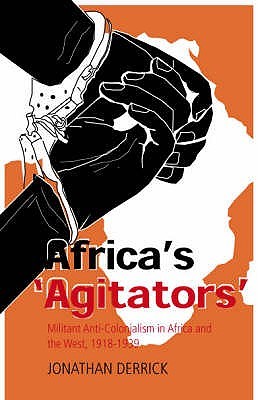
The period between the two World Wars were troubling years for colonial empire. Individuals and organizations began to c...
The period between the two World Wars were troubling years for colonial empire. Individuals and organizations began to call for major reforms and an end to white supremacy and colonial rule, contributing first to local unrest and protest and then to anticolonial activity not only in Africa but the United States and Europe as well. In this compelling history, Jonathan Derrick, a renowned scholar of Africa's past, recounts the opposition to British and French rule practiced both by Africans living on the continent and by European anticolonialists and members of the Black Diaspora. He covers campaigns waged by an early incarnation of the African National Congress and other groups in South Africa who fought against legal and other aspects of white minority rule. He also talks of the Kikuyu protests against the settler regime in Kenya; Marcus Garvey's African American movement and its role in sparking interest in Africa; the ?toile Nord Africaine, formed mainly by Algerians in France, that called for the independence of French North Africa; protests led by European critics against forced labor in Kenya and French Equatorial Africa; and the activity of small militant groups like the Ligue de D?fense de la Race N?gre (LDRN) in France and George Padmore's International African Service Bureau (IASB) in Britain. Derrick examines the role of the Comintern and Western Communist parties that were opposed to Western colonialism and ready to support militant action against it. He highlights common misunderstandings regarding the collaboration between Communists and other left-wing organizations on the one hand and African nationalists and pan-Africanists on the other, and examines the Communists' separation from Padmore, as well as the LDRN leader Garan Kouyate. He shows that, although colonial rulers greatly feared the specter of Communism in Africa, actual Communist activity was in fact quite small. Derrick reveals how, with the exception of a few colonies, anticolonial activity was easily organized, primarily because militants in Europe had the freedom to operate and create a tremendous impact. In the later 1930s, nationalist movements, fuelled by African outrage at the Italian occupation of Ethiopia, began to spread in parts of Africa. The approach and onset of the Second World War affected the rhetoric of anticolonialists, with French Communists opposing calls for independence as long as the danger of Nazism and Fascism existed, but some militants continued their anti-empire campaigns until 1939. The war then pushed colonial issues to the background, but as Derrick argues, in the long term the anticolonialists of the interwar era may have helped pave the way for later decolonization. Author: Jonathan Derrick ISBN:9781850659365
Read more
Show less
|
|
|
No comparison available for this listing.
Generate to see why you'd pick this one.
|
No comparison available for this listing.
Generate to see why you'd pick this one.
|
No comparison available for this listing.
Generate to see why you'd pick this one.
|
No comparison available for this listing.
Generate to see why you'd pick this one.
|