|
Description
|
After the Cold War, Africa earned the dubious distinction of being the world’s bloodiest continent. But how can we...
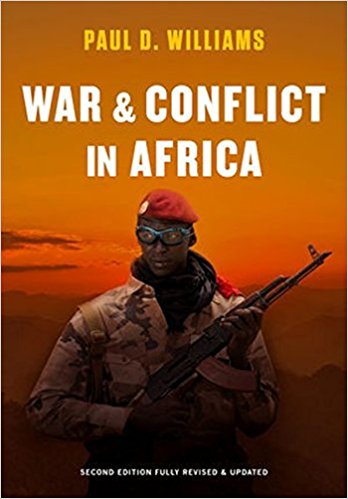
After the Cold War, Africa earned the dubious distinction of being the world’s bloodiest continent. But how can we explain this proliferation of armed conflicts? What caused them and what were their main characteristics? And what did the worlds governments do to stop them? Paul Williams offers an in-depth and wide-ranging assessment of more than 600 armed conflicts which took place in Africa from 1990 to the present day – from the continental catastrophe in the Great Lakes region to the sprawling conflicts across the Sahel and the web of wars in the horn of Africa. War and Conflict in Africa will be essential reading for all students of international peace and security studies as well as Africa’s international relations. Author: Paul D. Williams ISBN: 9781509509058
Read more
Show less
|
Africa has witnessed a number of transitions to democracy in recent years. Coinciding with this upsurge in democratic tr...
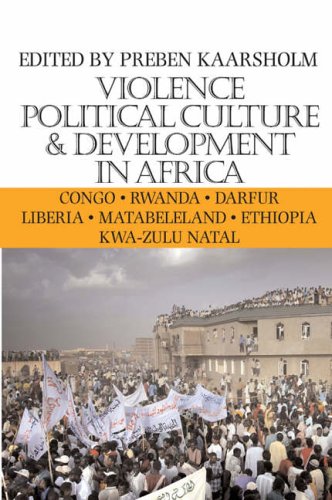
Africa has witnessed a number of transitions to democracy in recent years. Coinciding with this upsurge in democratic transitions there also have been spectacular experiences of social disintegration. An alternative to discourses of the 'failed' and 'collapsed' state in Africa is an approach that takes seriously the complexity of historical processes, on which the political development of individual nation states was based. The chapters in this volume run in a continuum from discussions of 'warlord politics' to an understanding of the 'new wars' in Africa as outcomes of fundamental changes in social solidarity. Wars and violent conflicts in Africa can thus be understood as responses to economic emergencies and political problems which are real, have histories, and can be engaged with constructively through both intellectual and practical efforts. Preben Kaarsholm is Associate Professor of International Development Studies at Roskilde Contributors include: WILLIAM RENO on state insurgencies, KOEN VLASSENROOT on eastern Congo; NIGEL ELTRINGHAM on Rwanda; DOUGLAS H. JOHNSON on Darfur; JOCELYN ALEXANDER on Matabeleland; ALESSANDRO TRIULZI on Ethiopia; PREBEN KAARSHOLM on KwaZulu-Natal; MATS UTAS on Liberia and PAUL RICHARDS on Sierra Leone. Author:Preben Kaarsholm ISBN:9780852558942
Read more
Show less
|
In October 1996, a motley crew of ageing Marxists and unemployed youth coalesced to revolt against Mobutu Seso Seko, pre...
In October 1996, a motley crew of ageing Marxists and unemployed youth coalesced to revolt against Mobutu Seso Seko, president of Zaire/Congo since 1965. The rebels of the AFDL marched over 1500km in seven months to crush the dictatorship, heralding liberation as a second independence for Central Africa as a whole. US President Bill Clinton toasted AFDL leader Laurent-Desire Kabila and his regional allies - having developed a unique camaraderie and personal trust on the region's battlefronts -- as a 'new generation of African leaders' ushering in an 'African Renaissance.' Within months, however, the Pan-Africanist alliance fell apart. The AFDL's collapse triggered a cataclysmic fratricide between the heroes of liberationthat became the deadliest conflict since the Second World War, drawing in eight African countries. This book draws on hundreds of interviews with protagonists from Africa and the international community to offer a novel theoretical and empirical account of Africa's Great War. Bridging the gap between comparative politics and international relations, it argues that the renewed outbreak of calamitous violence in August 1998 was a function of the kind of regime the AFDL was and how its leaders saw Congo, theregion and themselves. As a Pan-Africanist liberation movement, the collapse of the AFDL government internally and the unravelling of regional order externally were inextricably linked. Author: Harry Verhoeven, Philip Roessler ISBN:9781849049085
Read more
Show less
|
Post-war democratization has been identified as a crucial mechanism to build peace in war-ridden societies, supposedly a...
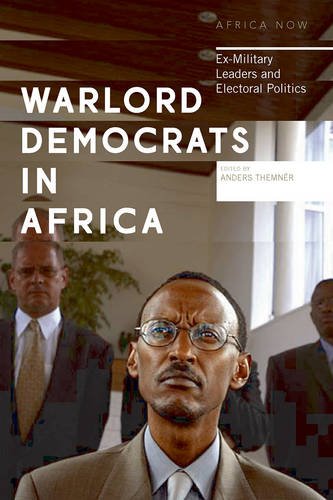
Post-war democratization has been identified as a crucial mechanism to build peace in war-ridden societies, supposedly allowing belligerents to compete through ballots rather than bullets. A byproduct of this process, however, is that military leaders often become an integral part of the new democratic system, using resources and networks generated from the previous war to dominate the emerging political landscape. The crucial and thus-far overlooked question to be addressed, therefore, is what effect the inclusion of ex-militaries into electoral politics has on post-war security. Can 'warlord democrats' make a positive contribution by shepherding their wartime constituencies to support the building of peace and democracy, or are they likely to use their electoral platforms to sponsor political violence and keep war-affected communities mobilized through aggressive discourses? This important volume, containing a wealth of fresh empirical detail and theoretical insight, and focussing on some of Africa's most high-profile political figures – from Paul Kagame to Riek Machar to Afonso Dhlakama – represents a crucial intervention in the literature of post-war democratization. Author: Anders Themner ISBN:9781783602483
Read more
Show less
|
|
|
No comparison available for this listing.
Generate to see why you'd pick this one.
|
No comparison available for this listing.
Generate to see why you'd pick this one.
|
No comparison available for this listing.
Generate to see why you'd pick this one.
|
No comparison available for this listing.
Generate to see why you'd pick this one.
|