|
Description
|
Since the financial crisis of 2008, the major governments of the world have resorted to printing large amounts of money...
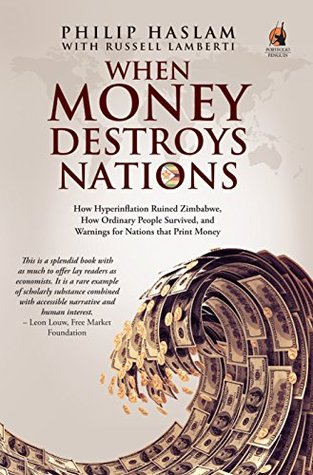
Since the financial crisis of 2008, the major governments of the world have resorted to printing large amounts of money to pay national debts and bail out banks. The warning signs are clear, and the collapse of the Zimbabwean dollar after years of rampant money printing is a frightening example of what lies in store for world economies if painful reform is not executed. When Money Destroys Nations tells the gripping story of the disintegration of the once-thriving Zimbabwean economy and how ordinary people survived in turbulent circumstances. Analysing this case within a global context, Philip Haslam and Russell Lamberti investigate the causes of hyperinflation and draw ominous parallels between Zimbabwe and the world's developed economies. The looming currency crises and hyperinflation in these major economies, particularly the United States, have the potential to turn the current world order upside down. This story of how money destroys nations holds lessons that cannot be ignored. Author: Philip Haslam ISBN:9780143539186
Read more
Show less
|
In 1971, President Nixon imposed national price controls and took the United States off the gold standard, an extreme me...
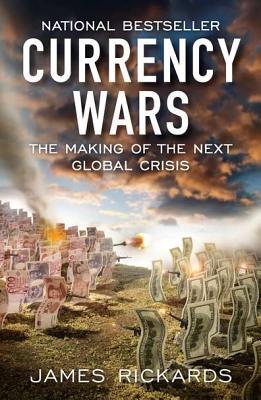
In 1971, President Nixon imposed national price controls and took the United States off the gold standard, an extreme measure intended to end an ongoing currency war that had destroyed faith in the U.S. dollar. Today we are engaged in a new currency war, and this time the consequences will be far worse than those that confronted Nixon.Currency wars are one of the most destructive and feared outcomes in international economics. At best, they offer the sorry spectacle of countries' stealing growth from their trading partners. At worst, they degenerate into sequential bouts of inflation, recession, retaliation, and sometimes actual violence. Left unchecked, the next currency war could lead to a crisis worse than the panic of 2008. Currency wars have happened before-twice in the last century alone-and they always end badly. Time and again, paper currencies have collapsed, assets have been frozen, gold has been confiscated, and capital controls have been imposed. And the next crash is overdue. Recent headlines about the debasement of the dollar, bailouts in Greece and Ireland, and Chinese currency manipulation are all indicators of the growing conflict. As James Rickards argues in Currency Wars, this is more than just a concern for economists and investors. The United States is facing serious threats to its national security, from clandestine gold purchases by China to the hidden agendas of sovereign wealth funds. Greater than any single threat is the very real danger of the collapse of the dollar itself. Baffling to many observers is the rank failure of economists to foresee or prevent the economic catastrophes of recent years. Not only have their theories failed to prevent calamity, they are making the currency wars worse. The U. S. Federal Reserve has engaged in the greatest gamble in the history of finance, a sustained effort to stimulate the economy by printing money on a trillion-dollar scale. Its solutions present hidden new dangers while resolving none of the current dilemmas. While the outcome of the new currency war is not yet certain, some version of the worst-case scenario is almost inevitable if U.S. and world economic leaders fail to learn from the mistakes of their predecessors. Rickards untangles the web of failed paradigms, wishful thinking, and arrogance driving current public policy and points the way toward a more informed and effective course of action. Author: James Rickards ISBN:9781591845560
Read more
Show less
|
This devastating and inspiring book, by one of the world's leading economic thinkers, lays out not only the course of th...
This devastating and inspiring book, by one of the world's leading economic thinkers, lays out not only the course of the financial crisis which began in 2007, but its underlying causes, and shows why much more radical reforms are needed than are currently being contemplated if we are to avoid similar 'systemic' crises in the future. It shows why the bailout has been only marginally effective and how it could have been much more so, and outlines the enormous opportunity - not yet taken - to design a new global financial architecture. It is highly critical of many of the actions not only of George Bush's administration, but also of Barack Obama's. It shows why the bulk of the cost of recovery should be borne by those in the financial sector - not just for reasons of natural justice, but for compelling economic reasons also. More than any of this, it reminds readers to think constantly about what economies are for, and the human purposes they serve. Freefall is an instant classic, combining an enthralling whodunit account of the current crisis with a bracing discussion of the broader economic issues at stake. About the Author: Joseph Stiglitz Joseph Stiglitz was Chief Economist at the World Bank until January 2000. He is currently University Professor of the Columbia Business School and Chair of the Management Board and Director of Graduate Summer Programs, Brooks World Poverty Institute, University of Manchester. He won the Nobel Prize for Economics in 2001 and is the author of the best-selling Globalization and Its Discontents, The Roaring Nineties, and Making Globalization Work. Author: Joseph Stiglitz ISBN:9780141045122
Read more
Show less
|
Winner of the 2010 Pulitzer Prize “A magisterial work…You can’t help thinking about the economic crisis we’re living thr...
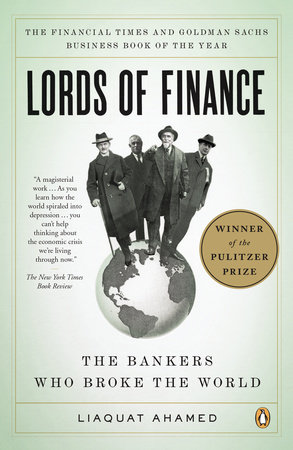
Winner of the 2010 Pulitzer Prize “A magisterial work…You can’t help thinking about the economic crisis we’re living through now.” —The New York Times Book Review It is commonly believed that the Great Depression that began in 1929 resulted from a confluence of events beyond any one person’s or government’s control. In fact, as Liaquat Ahamed reveals, it was the decisions made by a small number of central bankers that were the primary cause of that economic meltdown, the effects of which set the stage for World War II and reverberated for decades. As yet another period of economic turmoil makes headlines today, Lords of Finance is a potent reminder of the enormous impact that the decisions of central bankers can have, their fallibility, and the terrible human consequences that can result when they are wrong. Author: Liaquat Ahamed ISBN:9780099493082
Read more
Show less
|