|
Description
|
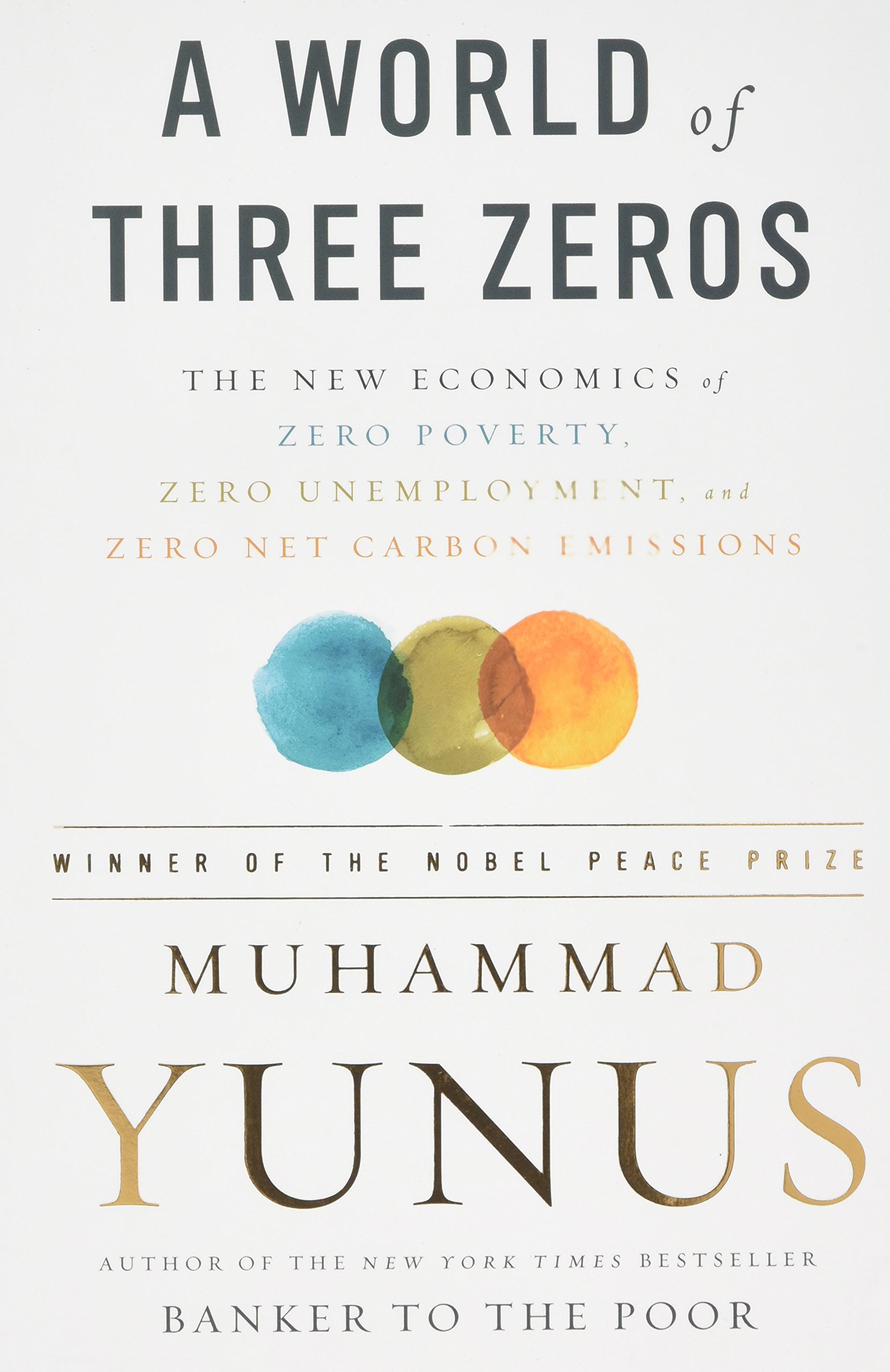
Muhammad Yunus, the Bangladeshi economist who invented microcredit, founded Grameen Bank, and earned a Nobel Prize for h...
Muhammad Yunus, the Bangladeshi economist who invented microcredit, founded Grameen Bank, and earned a Nobel Prize for his work in alleviating poverty, is one of today's most trenchant social critics. In his latest book, he declares it's time to admit that the capitalist engine is broken--that in its current form it inevitably leads to rampant inequality, massive unemployment, and environmental destruction. To save humankind and the planet, we need a new economic system based on a more realistic vision of human nature--one that recognizes altruism and generosity as driving forces that are just as fundamental and powerful as self-interest. Is this a pipe dream? Not at all. In the decade since Yunus first began to articulate his ideas for a new form of capitalism, thousands of companies, nonprofits, and individual entrepreneurs around the world have embraced them. From Albania to Colombia, India to Germany, France to Malaysia, Haiti to Cambodia, businesses and enterprises are being created that are committed to reducing poverty, improving health care and education, cleaning up pollution, and serving other urgent human needs in ingenious, innovative ways. In A World of Three Zeros, Yunus describes the new civilization that is emerging from the economic experiments his work has helped to inspire and offers a challenge to young people, business and political leaders, and ordinary citizens to embrace his mission to eradicate three unintended and pernicious aftereffects of unrestrained capitalism, and so improve the prospects for everyone. Author: Muhammad Yunus ISBN:9781911344568
Read more
Show less
|
Deep new rifts are tearing apart the fabric of Britain and other Western societies: thriving cities versus the provinces...
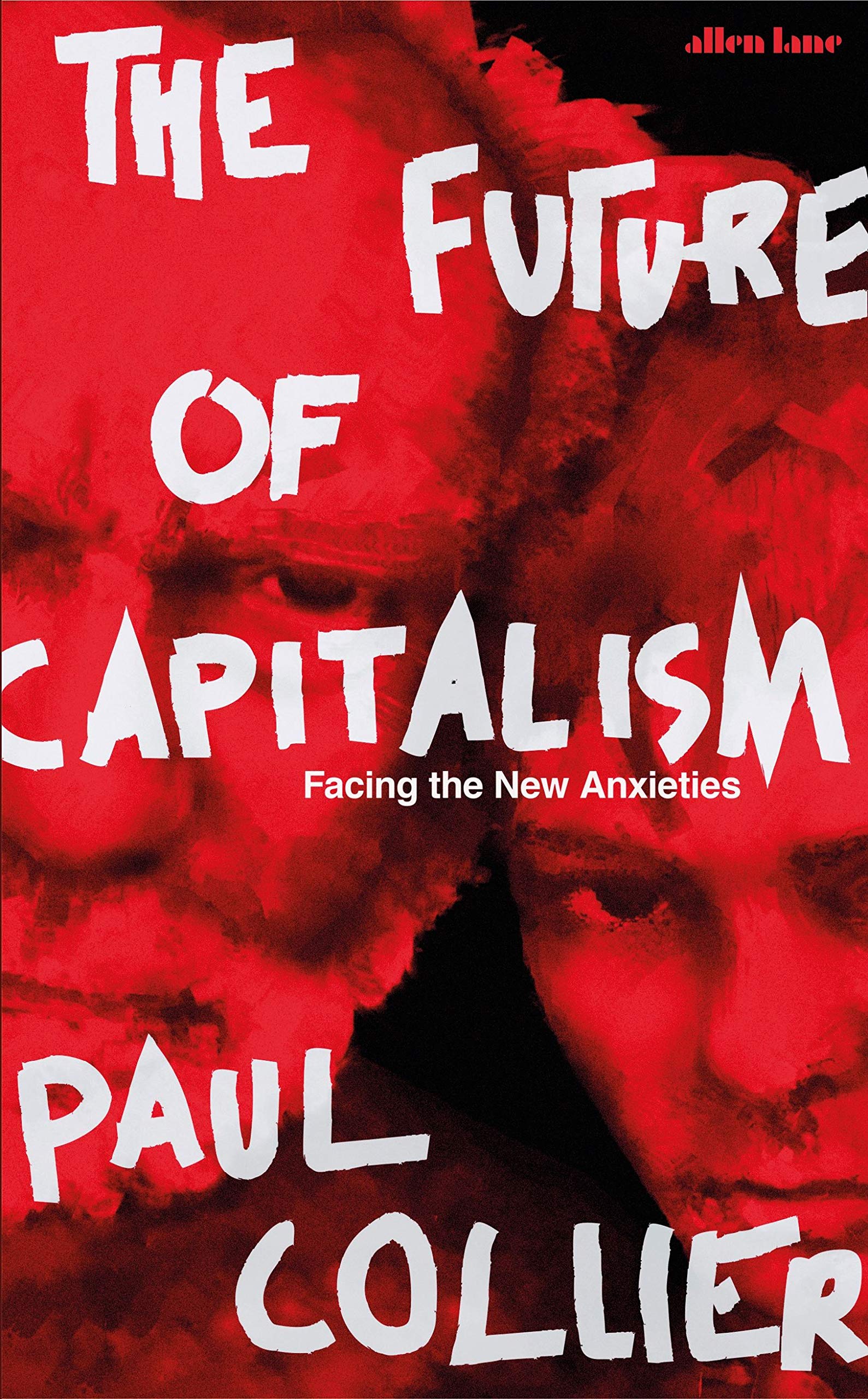
Deep new rifts are tearing apart the fabric of Britain and other Western societies: thriving cities versus the provinces, the highly skilled elite versus the less educated, wealthy versus developing countries. As these divides deepen, we have lost the sense of ethical obligation to others that was crucial to the rise of post-war social democracy. So far these rifts have been answered only by the revivalist ideologies of populism and socialism, leading to the seismic upheavals of Trump, Brexit and the return of the far right in Germany. We have heard many critiques of capitalism but no one has laid out a realistic way to fix it, until now. In a passionate and polemical book, celebrated economist Paul Collier outlines brilliantly original and ethical ways of healing these rifts - economic, social and cultural - with the cool head of pragmatism, rather than the fervour of ideological revivalism. He reveals how he has personally lived across these three divides, moving from working-class Sheffield to hyper-competitive Oxford, and working between Britain and Africa, and acknowledges some of the failings of his profession. Drawing on his own solutions as well as ideas from some of the world's most distinguished social scientists, he shows us how to save capitalism from itself - and free ourselves from the intellectual baggage of the 20th century. Author: Paul Collier ISBN:9780241333884
Read more
Show less
|
Throughout the Western world, governments and financial elites responded to the financial crisis of 2008 by trying to re...
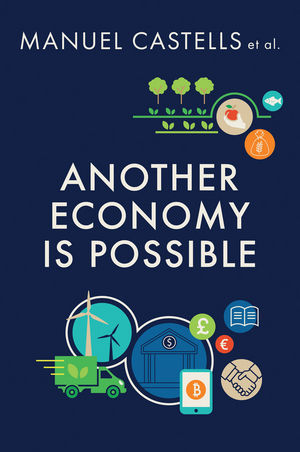
Throughout the Western world, governments and financial elites responded to the financial crisis of 2008 by trying to restore the conditions of business as usual, but the economic, social and human damage inflicted by the crisis has given rise to a reconsideration of the inevitability of unfettered capitalism as a fact of life. A number of economic practices and organizations emerged in Europe and the United States that embodied alternative values: the value of life over the value of money; the effectiveness of cooperation over cut-throat competition; the social responsibility of corporations and responsible regulation by governments over the short-term speculative strategies that brought the economy to the brink of catastrophe. This book examines the blossoming of innovative new experiments in organizing work and life that emerged in the wake of the financial crisis: cooperatives, barter networks, ethical banking, community currencies, shared time banks, solidarity networks, sharing of goods, non-monetary transactions, etc., experiments that paved the way for the emergence of a sharing economy in all domains of activity oriented toward the satisfaction of human needs. Other innovations included the creation of cryptographic virtual currencies, epitomized by bitcoin, which blended a libertarian, entrepreneurial spirit with information technology to provide an alternative to standard forms of currency. On the basis of a cross-cultural analysis of alternative economic practices, this book develops an important theoretical argument: that the economy, as a human practice, is shaped by culture, and that the diversity of cultures, as revealed in a time of crisis, implies the possibility of different economies depending on the values and power relations that define economic institutions. This book will be of great interest to students and scholars in sociology, economics and the social sciences generally, and to anyone who wishes to understand how our societies and economies are changing today. (less) Author: Manuel Castlells ISBN:9781509517213
Read more
Show less
|
This devastating and inspiring book, by one of the world's leading economic thinkers, lays out not only the course of th...
This devastating and inspiring book, by one of the world's leading economic thinkers, lays out not only the course of the financial crisis which began in 2007, but its underlying causes, and shows why much more radical reforms are needed than are currently being contemplated if we are to avoid similar 'systemic' crises in the future. It shows why the bailout has been only marginally effective and how it could have been much more so, and outlines the enormous opportunity - not yet taken - to design a new global financial architecture. It is highly critical of many of the actions not only of George Bush's administration, but also of Barack Obama's. It shows why the bulk of the cost of recovery should be borne by those in the financial sector - not just for reasons of natural justice, but for compelling economic reasons also. More than any of this, it reminds readers to think constantly about what economies are for, and the human purposes they serve. Freefall is an instant classic, combining an enthralling whodunit account of the current crisis with a bracing discussion of the broader economic issues at stake. About the Author: Joseph Stiglitz Joseph Stiglitz was Chief Economist at the World Bank until January 2000. He is currently University Professor of the Columbia Business School and Chair of the Management Board and Director of Graduate Summer Programs, Brooks World Poverty Institute, University of Manchester. He won the Nobel Prize for Economics in 2001 and is the author of the best-selling Globalization and Its Discontents, The Roaring Nineties, and Making Globalization Work. Author: Joseph Stiglitz ISBN:9780141045122
Read more
Show less
|