|
Description
|
No one in 1980 could have guessed that Zimbabwe would become a failed state on such a monumental and tragic scale. In th...
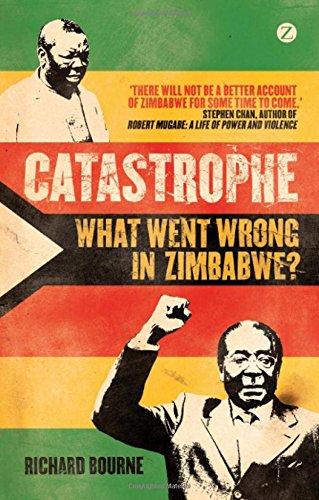
No one in 1980 could have guessed that Zimbabwe would become a failed state on such a monumental and tragic scale. In this incisive and revealing book, Richard Bourne shows how a country which had every prospect of success when it achieved a delayed independence in 1980 became a brutal police state with hyperinflation, collapsing life expectancy and abandonment by a third of its citizens less than thirty years later. Beginning with the British conquest of Zimbabwe and covering events up to the present precarious political situation, this is the most comprehensive, up-to-date and readable account of the ongoing crisis. Bourne shows that Zimbabwe's tragedy is not just about Mugabe's 'evil' but about history, Africa today and the world's attitudes towards them. Author: Richard Bourne ISBN:9781848135215
Read more
Show less
|
The question usually asked about Africa is: 'why is it going wrong?' Is the continent still suffering from the ravages o...
The question usually asked about Africa is: 'why is it going wrong?' Is the continent still suffering from the ravages of colonialism? Or is it the victim of postcolonial economic exploitation, poor governance and lack of aid? Whatever the answer, increasingly the result is poverty and violence. In Africa: the Politics of Suffering and Smiling Patrick Chabal approaches this question differently by reconsidering the role of theory in African politics. Chabal discusses the limitations of existing political theories of Africa and proposes a different starting point; arguing that political thinking ought to be driven by the need to address the immediacy of everyday life and death. How do people define who they are? Where do they belong? What do they believe? How do they struggle to survive and improve their lives? What is the impact of illness and poverty? In doing so, Chabal proposes a radically different way of looking at politics in Africa and illuminates the ways ordinary people 'suffer and smile'. This is a highly original addition to Zed's groundbreaking World Political Theories series. Author: Patrick Chabal ISBN:9781842779095
Read more
Show less
|
The author of the acclaimed Stringer: A Reporter’s Journey in the Congo now moves on to Rwanda for a gripping look at a...
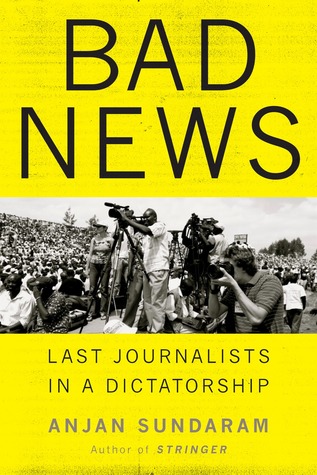
The author of the acclaimed Stringer: A Reporter’s Journey in the Congo now moves on to Rwanda for a gripping look at a country caught still in political and social unrest, years after the genocide that shocked the world. Bad News is the story of Anjan Sundaram's time running a journalist's training program out of Kigali, the capital city of one of Africa's most densely populated countries, Rwanda. President Kagame’s regime, which seized power after the genocide that ravaged its population in 1994, is often held up as a beacon for progress and modernity in Central Africa and is the recipient of billions of dollars each year in aid from Western governments and international organizations. Lurking underneath this shining vision of a modern, orderly state, however, is the powerful climate of fear springing from the government's brutal treatment of any voice of dissent. "You can't look and write," a policeman ominously tells Sundaram, as he takes notes at a political rally. In Rwanda, the testimony of the individual—the evidence of one's own experience—is crushed by the pensée unique: the single way of thinking and speaking, proscribed by those in power. A vivid portrait of a country at an extraordinary and dangerous place in its history, Bad News is a brilliant and urgent parable on freedom of expression, and what happens when that power is seized. Author: Anjan Sundaram ISBN:9780385539562
Read more
Show less
|
In October 1996, a motley crew of ageing Marxists and unemployed youth coalesced to revolt against Mobutu Seso Seko, pre...
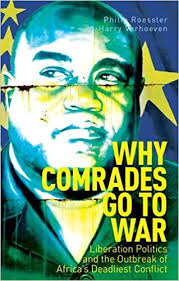
In October 1996, a motley crew of ageing Marxists and unemployed youth coalesced to revolt against Mobutu Seso Seko, president of Zaire/Congo since 1965. The rebels of the AFDL marched over 1500km in seven months to crush the dictatorship, heralding liberation as a second independence for Central Africa as a whole. US President Bill Clinton toasted AFDL leader Laurent-Desire Kabila and his regional allies - having developed a unique camaraderie and personal trust on the region's battlefronts -- as a 'new generation of African leaders' ushering in an 'African Renaissance.' Within months, however, the Pan-Africanist alliance fell apart. The AFDL's collapse triggered a cataclysmic fratricide between the heroes of liberationthat became the deadliest conflict since the Second World War, drawing in eight African countries. This book draws on hundreds of interviews with protagonists from Africa and the international community to offer a novel theoretical and empirical account of Africa's Great War. Bridging the gap between comparative politics and international relations, it argues that the renewed outbreak of calamitous violence in August 1998 was a function of the kind of regime the AFDL was and how its leaders saw Congo, theregion and themselves. As a Pan-Africanist liberation movement, the collapse of the AFDL government internally and the unravelling of regional order externally were inextricably linked. Author: Harry Verhoeven, Philip Roessler ISBN:9781849049085
Read more
Show less
|
|
|
No comparison available for this listing.
Generate to see why you'd pick this one.
|
No comparison available for this listing.
Generate to see why you'd pick this one.
|
No comparison available for this listing.
Generate to see why you'd pick this one.
|
No comparison available for this listing.
Generate to see why you'd pick this one.
|