|
Description
|
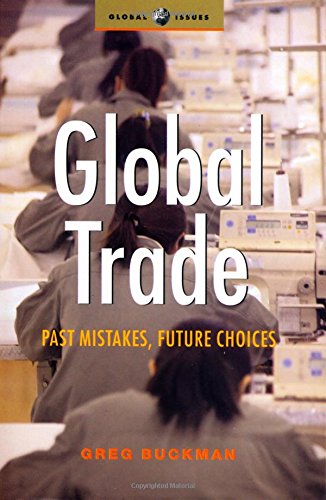
Trade, along with the free movement of capital, is at the heart of today's international economy. But international trad...
Trade, along with the free movement of capital, is at the heart of today's international economy. But international trade is an intensely political and contested subject. In this book, Greg Buckman details possible future directions in global energy supplies and balance-of-payments imbalances. He argues that, just as current trading arrangements have been the product of past decisions emerging out of apparently unrelated considerations, so factors like future fossil fuel costs, global warming, and the economic imbalances between North and South are likely to impel a radical reshaping of the WTO and the principles enshrined in its agreements as well as the global trading system in general. A key contribution to thinking about possible trade policy reforms are the reforms and alternatives - themselves not always agreed or sufficiently thought through -- advocated by the global justice movement. This book outlines these diverse proposals to make global trade more sustainable in some detail. This book has been written to be both informative and empowering. It is an important contribution to clearer thinking, more effective campaigning, and fundamental policy reform in the field of international trade. Author: Greg Buckman ISBN:9781842775790
Read more
Show less
|
Basic Economicsis a citizen's guide to economics, written for those who want to understand how the economy works but hav...
Basic Economicsis a citizen's guide to economics, written for those who want to understand how the economy works but have no interest in jargon or equations. Bestselling economist Thomas Sowell explains the general principles underlying different economic systems: capitalist, socialist, feudal, and so on. In readable language, he shows how to critique economic policies in terms of the incentives they create, rather than the goals they proclaim. With clear explanations of the entire field, from rent control and the rise and fall of businesses to the international balance of payments, this is the first book for anyone who wishes to understand how the economy functions. This fifth edition includes a new chapter explaining the reasons for large differences of wealth and income between nations. Drawing on lively examples from around the world and from centuries of history, Sowell explains basic economic principles for the general public in plain English. Author: Thomas Sowell ISBN:9780465060733
Read more
Show less
|
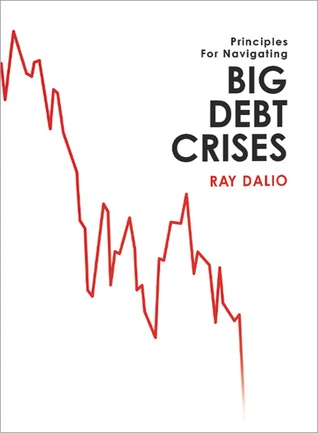
“Ray Dalio’s excellent study provides an innovative way of thinking about debt crises and the policy respons...
“Ray Dalio’s excellent study provides an innovative way of thinking about debt crises and the policy response.” - Ben Bernanke “Ray Dalio’s book is must reading for anyone who aspires to prevent or manage through the next financial crisis.” - Larry Summers “A terrific piece of work from one of the world’s top investors who has devoted his life to understanding markets and demonstrated that understanding by navigating the 2008 financial crisis well.” - Hank Paulson “An outstanding history of financial crises, including the devastating crisis of 2008, with a very valuable framework for understanding why the engine of the financial system occasionally breaks down, and what types of policy actions by central banks and governments are necessary to resolve systemic financial crises. This should serve as a play book for future policy makers, with practical guidance about what to do and what not to do.” - Tim Geithner “Dalio’s approach, as in his investment management, is to synthesize information, and to convert a sprawling and multi-faceted issue into a clear-cut process of cause and effect. Critically, he simplifies without over-simplifying.” - Financial Times For the 10th anniversary of the 2008 financial crisis, one of the world’s most successful investors, Ray Dalio, shares his unique template for how debt crises work and principles for dealing with them well. This template allowed his firm, Bridgewater Associates, to anticipate events and navigate them well while others struggled badly. As he explained in his #1 New York Times Bestseller, Principles: Life & Work, Dalio believes that most everything happens over and over again through time so that by studying their patterns one can understand the cause-effect relationships behind them and develop principles for dealing with them well. In this 3-part research series, he does that for big debt crises and shares his template in the hopes reducing the chances of big debt crises happening and helping them be better managed in the future. The template comes in three parts provided in three books: 1) The Archetypal Big Debt Cycle (which explains the template), 2) 3 Detailed Cases (which examines in depth the 2008 financial crisis, the 1930’s Great Depression, and the 1920’s inflationary depression of Germany’s Weimar Republic), and 3) Compendium of 48 Cases (which is a compendium of charts and brief descriptions of the worst debt crises of the last 100 years). Whether you’re an investor, a policy maker, or are simply interested, the unconventional perspective of one of the few people who navigated the crises successfully, Principles for Navigating Big Debt Crises will help you understand the economy and markets in revealing new ways. Author: Ray Dalio ISBN:9781732689800
Read more
Show less
|
Clayton M. Christensen, the author of such business classics as The Innovator’s Dilemma and the New York Times bes...
Clayton M. Christensen, the author of such business classics as The Innovator’s Dilemma and the New York Times bestseller How Will You Measure Your Life, and co-authors Efosa Ojomo and Karen Dillon reveal why so many investments in economic development fail to generate sustainable prosperity, and offers a groundbreaking solution for true and lasting change. Global poverty is one of the world’s most vexing problems. For decades, we’ve assumed smart, well-intentioned people will eventually be able to change the economic trajectory of poor countries. From education to healthcare, infrastructure to eradicating corruption, too many solutions rely on trial and error. Essentially, the plan is often to identify areas that need help, flood them with resources, and hope to see change over time. But hope is not an effective strategy. Clayton M. Christensen and his co-authors reveal a paradox at the heart of our approach to solving poverty. While noble, our current solutions are not producing consistent results, and in some cases, have exacerbated the problem. At least twenty countries that have received billions of dollars’ worth of aid are poorer now. Applying the rigorous and theory-driven analysis he is known for, Christensen suggests a better way. The right kind of innovation not only builds companies—but also builds countries. The Prosperity Paradox identifies the limits of common economic development models, which tend to be top-down efforts, and offers a new framework for economic growth based on entrepreneurship and market-creating innovation. Christensen, Ojomo, and Dillon use successful examples from America’s own economic development, including Ford, Eastman Kodak, and Singer Sewing Machines, and shows how similar models have worked in other regions such as Japan, South Korea, Nigeria, Rwanda, India, Argentina, and Mexico. The ideas in this book will help companies desperate for real, long-term growth see actual, sustainable progress where they’ve failed before. But The Prosperity Paradox is more than a business book; it is a call to action for anyone who wants a fresh take for making the world a better and more prosperous place. Author:Clayton M Christensen, Efosa Ojomo, Karen Dillon ISBN:9780062851826
Read more
Show less
|