|
Description
|
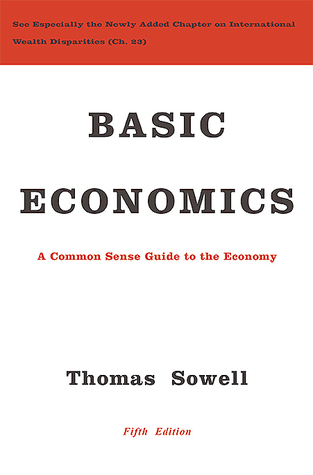
Basic Economicsis a citizen's guide to economics, written for those who want to understand how the economy works but hav...
Basic Economicsis a citizen's guide to economics, written for those who want to understand how the economy works but have no interest in jargon or equations. Bestselling economist Thomas Sowell explains the general principles underlying different economic systems: capitalist, socialist, feudal, and so on. In readable language, he shows how to critique economic policies in terms of the incentives they create, rather than the goals they proclaim. With clear explanations of the entire field, from rent control and the rise and fall of businesses to the international balance of payments, this is the first book for anyone who wishes to understand how the economy functions. This fifth edition includes a new chapter explaining the reasons for large differences of wealth and income between nations. Drawing on lively examples from around the world and from centuries of history, Sowell explains basic economic principles for the general public in plain English. Author: Thomas Sowell ISBN:9780465060733
Read more
Show less
|
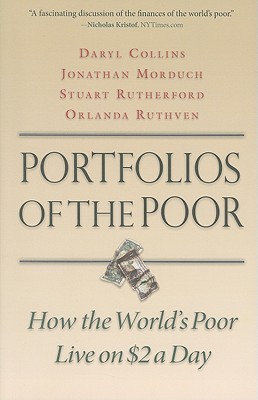
Nearly forty percent of humanity lives on an average of two dollars a day or less. If you've never had to survive on an...
Nearly forty percent of humanity lives on an average of two dollars a day or less. If you've never had to survive on an income so small, it is hard to imagine. How would you put food on the table, afford a home, and educate your children? How would you handle emergencies and old age? Every day, more than a billion people around the world must answer these questions. Portfolios of the Poor is the first book to systematically explain how the poor find solutions to their everyday financial problems. The authors conducted year-long interviews with impoverished villagers and slum dwellers in Bangladesh, India, and South Africa--records that track penny by penny how specific households manage their money. The stories of these families are often surprising and inspiring. Most poor households do not live hand to mouth, spending what they earn in a desperate bid to keep afloat. Instead, they employ financial tools, many linked to informal networks and family ties. They push money into savings for reserves, squeeze money out of creditors whenever possible, run sophisticated savings clubs, and use microfinancing wherever available. Their experiences reveal new methods to fight poverty and ways to envision the next generation of banks for the "bottom billion." Indispensable for those in development studies, economics, and microfinance, Portfolios of the Poor will appeal to anyone interested in knowing more about poverty and what can be done about it. Author: Daryl Collins ISBN:9780691148199
Read more
Show less
|
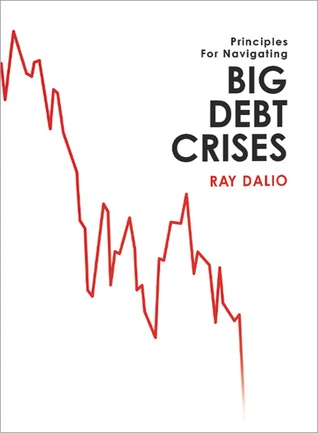
“Ray Dalio’s excellent study provides an innovative way of thinking about debt crises and the policy respons...
“Ray Dalio’s excellent study provides an innovative way of thinking about debt crises and the policy response.” - Ben Bernanke “Ray Dalio’s book is must reading for anyone who aspires to prevent or manage through the next financial crisis.” - Larry Summers “A terrific piece of work from one of the world’s top investors who has devoted his life to understanding markets and demonstrated that understanding by navigating the 2008 financial crisis well.” - Hank Paulson “An outstanding history of financial crises, including the devastating crisis of 2008, with a very valuable framework for understanding why the engine of the financial system occasionally breaks down, and what types of policy actions by central banks and governments are necessary to resolve systemic financial crises. This should serve as a play book for future policy makers, with practical guidance about what to do and what not to do.” - Tim Geithner “Dalio’s approach, as in his investment management, is to synthesize information, and to convert a sprawling and multi-faceted issue into a clear-cut process of cause and effect. Critically, he simplifies without over-simplifying.” - Financial Times For the 10th anniversary of the 2008 financial crisis, one of the world’s most successful investors, Ray Dalio, shares his unique template for how debt crises work and principles for dealing with them well. This template allowed his firm, Bridgewater Associates, to anticipate events and navigate them well while others struggled badly. As he explained in his #1 New York Times Bestseller, Principles: Life & Work, Dalio believes that most everything happens over and over again through time so that by studying their patterns one can understand the cause-effect relationships behind them and develop principles for dealing with them well. In this 3-part research series, he does that for big debt crises and shares his template in the hopes reducing the chances of big debt crises happening and helping them be better managed in the future. The template comes in three parts provided in three books: 1) The Archetypal Big Debt Cycle (which explains the template), 2) 3 Detailed Cases (which examines in depth the 2008 financial crisis, the 1930’s Great Depression, and the 1920’s inflationary depression of Germany’s Weimar Republic), and 3) Compendium of 48 Cases (which is a compendium of charts and brief descriptions of the worst debt crises of the last 100 years). Whether you’re an investor, a policy maker, or are simply interested, the unconventional perspective of one of the few people who navigated the crises successfully, Principles for Navigating Big Debt Crises will help you understand the economy and markets in revealing new ways. Author: Ray Dalio ISBN:9781732689800
Read more
Show less
|
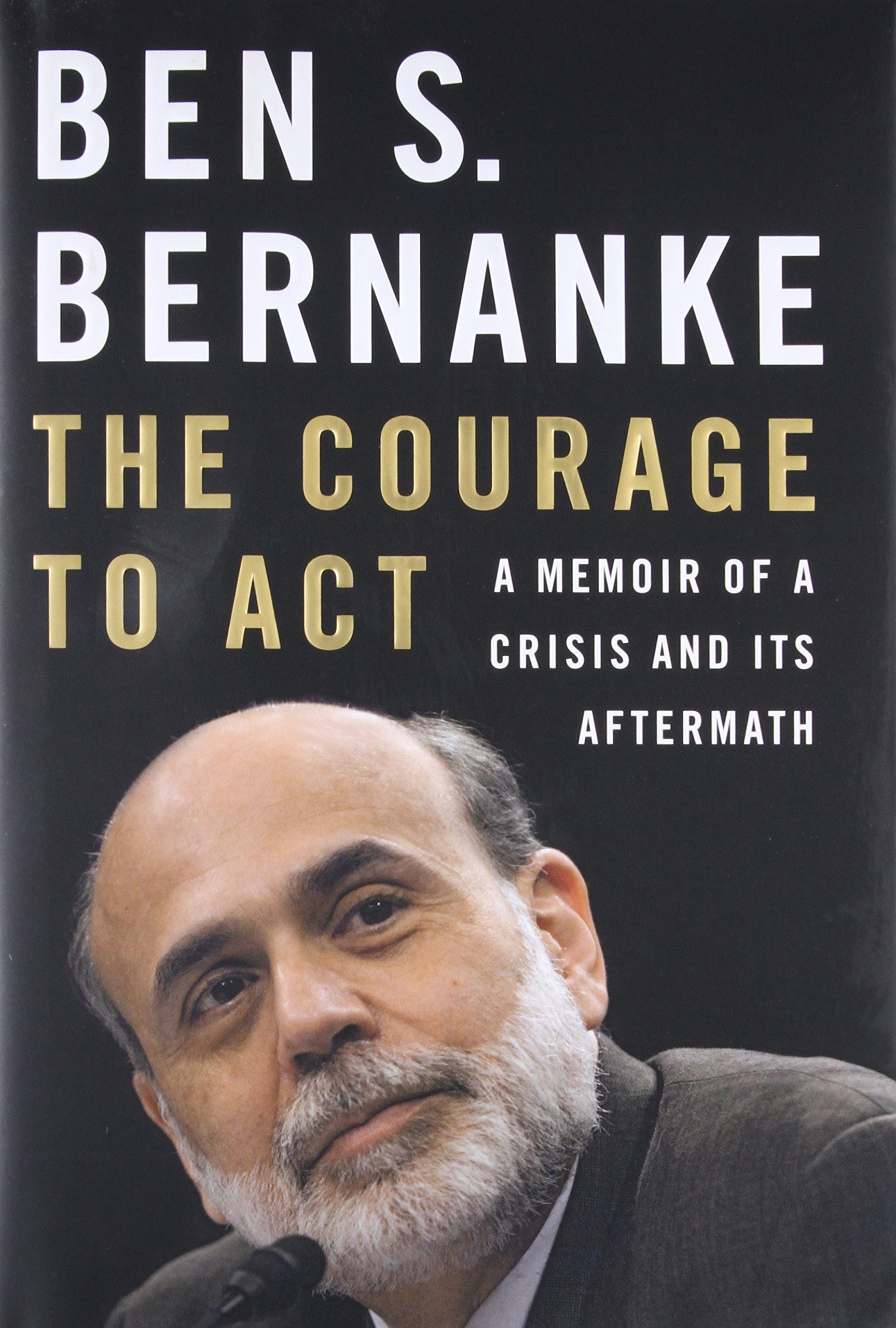
In 2006, Ben S. Bernanke was appointed chair of the Federal Reserve, capping a meteoric trajectory from a rural South Ca...
In 2006, Ben S. Bernanke was appointed chair of the Federal Reserve, capping a meteoric trajectory from a rural South Carolina childhood to professorships at Stanford and Princeton, to public service in Washington's halls of power. There would be no time to celebrate, however-the burst of the housing bubble in 2007 set off a domino effect that would bring the global financial system to the brink of meltdown. In The Courage to Act, Ben Bernanke pulls back the curtain on the tireless and ultimately successful efforts to prevent a mass economic failure. Working with two U.S. presidents and two Treasury secretaries, Dr. Bernanke and his colleagues used every Fed capability, no matter how arcane, to keep the U.S. economy afloat. From his arrival in Washington in 2002 and his experiences before the crisis, to the intense days and weeks of the crisis itself, and through the Great Recession that followed, Dr. Bernanke gives readers an unequaled perspective on the American economy. This narrative will reveal for the first time how the creativity and decisiveness of a few key leaders prevented an economic collapse of unimaginable scale. Author:Ben S Bernanke ISBN:9780393353990
Read more
Show less
|