|
Description
|
Air bags cause accidents, because well-protected drivers take more risks. This well-documented truth comes as a surprise...
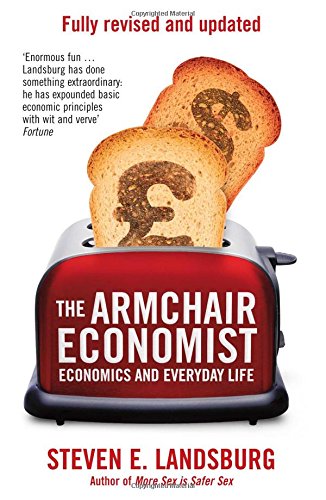
Air bags cause accidents, because well-protected drivers take more risks. This well-documented truth comes as a surprise to most people, but not to economists, who have learned to take seriously the proposition that people respond to incentives. In The Armchair Economist, Steven E. Landsburg shows how the laws of economics reveal themselves in everyday experience and illuminate the entire range of human behavior. Why does popcorn cost so much at the cinema? The 'obvious' answer is that the owner has a monopoly, but if that were the whole story, there would also be a monopoly price to use the toilet. When a sudden frost destroys much of the Florida orange crop and prices skyrocket, journalists point to the 'obvious' exercise of monopoly power. Economists see just the opposite: If growers had monopoly power, they'd have raised prices before the frost. Why don't concert promoters raise ticket prices even when they are sure they will sell out months in advance? Why are some goods sold at auction and others at pre-announced prices? Why do boxes at the football sell out before the standard seats do? Why are bank buildings fancier than supermarkets? Why do corporations confer huge pensions on failed executives? Why don't firms require workers to buy their jobs? Landsburg explains why the obvious answers are wrong, reveals better answers, and illuminates the fundamental laws of human behavior along the way. This is a book of surprises: a guided tour of the familiar, filtered through a decidedly unfamiliar lens. This is economics for the sheer intellectual joy of it. Author: Steven Landsburg ISBN:9781471101311
Read more
Show less
|
Which is more dangerous, a gun or a swimming pool? What do schoolteachers and sumo wrestlers have in common? Why do drug...
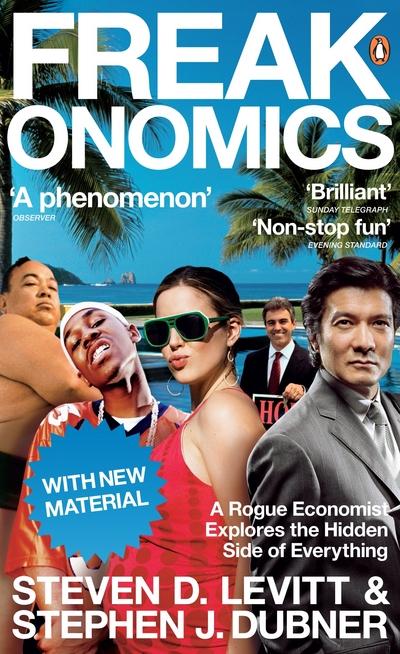
Which is more dangerous, a gun or a swimming pool? What do schoolteachers and sumo wrestlers have in common? Why do drug dealers still live with their moms? How much do parents really matter? What kind of impact did Roe v. Wade have on violent crime? Freakonomics will literally redefine the way we view the modern world. These may not sound like typical questions for an economist to ask. But Steven D. Levitt is not a typical economist. He is a much heralded scholar who studies the stuff and riddles of everyday life -- from cheating and crime to sports and child rearing -- and whose conclusions regularly turn the conventional wisdom on its head. He usually begins with a mountain of data and a simple, unasked question. Some of these questions concern life-and-death issues; others have an admittedly freakish quality. Thus the new field of study contained in this book: freakonomics. Through forceful storytelling and wry insight, Levitt and co-author Stephen J. Dubner show that economics is, at root, the study of incentives -- how people get what they want, or need, especially when other people want or need the same thing. In Freakonomics, they set out to explore the hidden side of ... well, everything. The inner workings of a crack gang. The truth about real-estate agents. The myths of campaign finance. The telltale marks of a cheating schoolteacher. The secrets of the Ku Klux Klan. What unites all these stories is a belief that the modern world, despite a surfeit of obfuscation, complication, and downright deceit, is not impenetrable, is not unknowable, and -- if the right questions are asked -- is even more intriguing than we think. All it takes is a new way of looking. Steven Levitt, through devilishly clever and clear-eyed thinking, shows how to see through all the clutter. Freakonomics establishes this unconventional premise: If morality represents how we would like the world to work, then economics represents how it actually does work. It is true that readers of this book will be armed with enough riddles and stories to last a thousand cocktail parties. But Freakonomics can provide more than that. It will literally redefine the way we view the modern world. Author: Steven D. Levitt, Stephen J. Dubner ISBN:9780141030081
Read more
Show less
|
ECONOMIST, FINANCIAL TIMES and EVENING STANDARD BOOKS OF THE YEAR 2015 Shortlisted for the Financial Times and McKinsey...
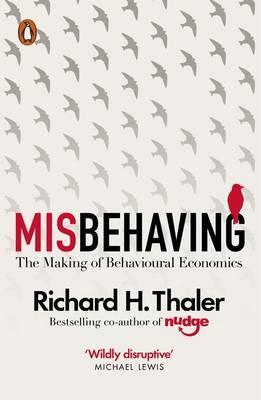
ECONOMIST, FINANCIAL TIMES and EVENING STANDARD BOOKS OF THE YEAR 2015 Shortlisted for the Financial Times and McKinsey Business Book of the Year Award From the renowned and entertaining behavioural economist and co-author of the seminal work Nudge, Misbehaving is an irreverent and enlightening look into human foibles. Traditional economics assumes that rational forces shape everything. Behavioural economics knows better. Richard Thaler has spent his career studying the notion that humans are central to the economy - and that we're error-prone individuals, not Spock-like automatons. Now behavioural economics is hugely influential, changing the way we think not just about money, but about ourselves, our world and all kinds of everyday decisions. Whether buying an alarm clock, selling football tickets, or applying for a mortgage, we all succumb to biases and make decisions that deviate from the standards of rationality assumed by economists. In other words, we misbehave. Dismissed at first by economists as an amusing sideshow, the study of human miscalculations and their effects on markets now drives efforts to make better decisions in our lives, our businesses, and our governments. Coupling recent discoveries in human psychology with a practical understanding of incentives and market behaviour, Thaler enlightens readers about how to make smarter decisions in an increasingly mystifying world. He reveals how behavioural economic analysis opens up new ways to look at everything from household finance to assigning faculty offices in a new building, to TV quiz shows, sports transfer seasons, and businesses like Uber. When economics meets psychology, the implications for individuals, managers and policy makers are both profound and entertaining. Author: Richard H. Thaler ISBN:9780241951224
Read more
Show less
|
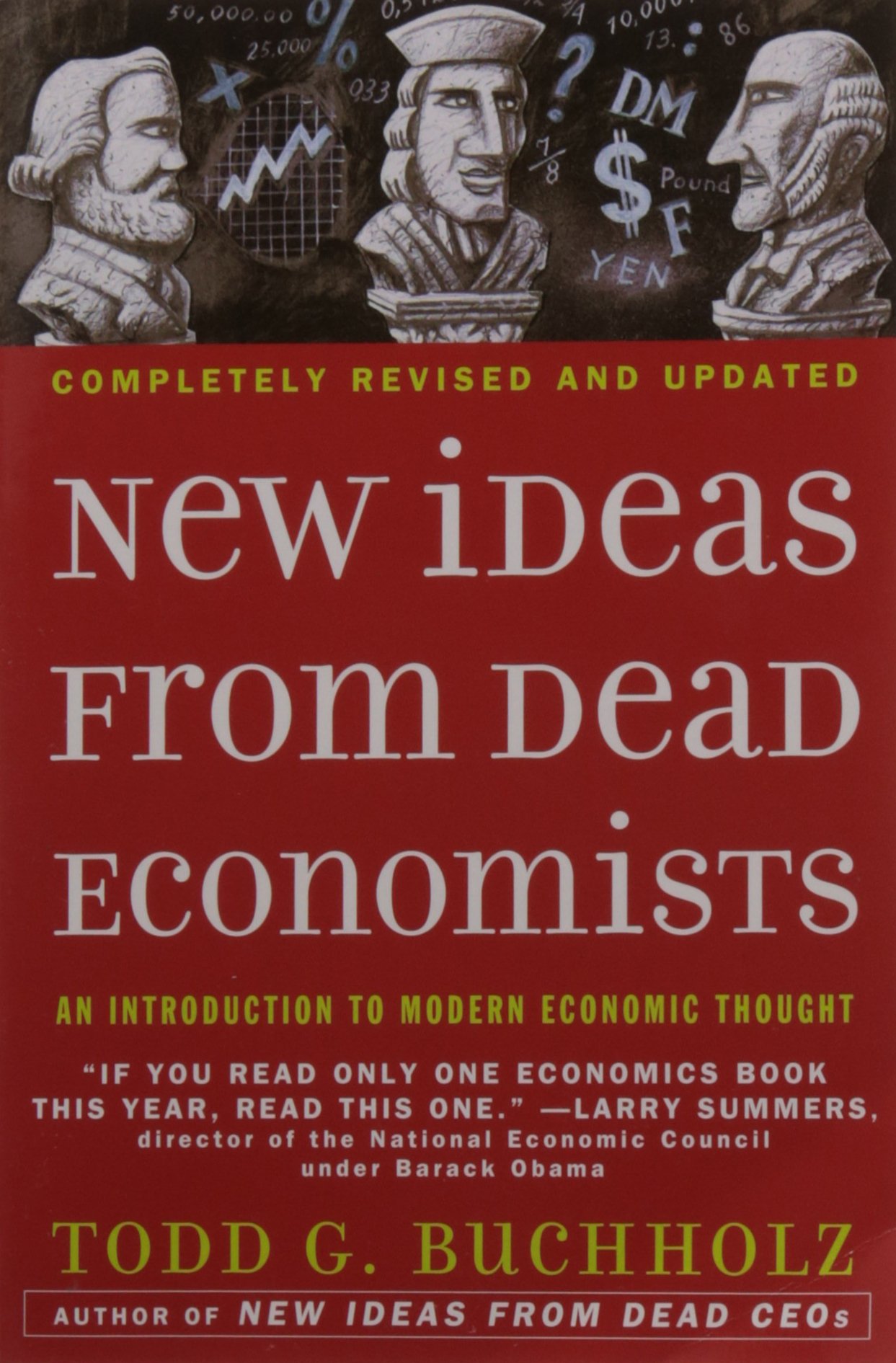
A witty, entertaining, accessible introduction to modern economic thought. Buchholz shows how the ideas of the great eco...
A witty, entertaining, accessible introduction to modern economic thought. Buchholz shows how the ideas of the great economic thinkers throughout history - Adam Smith, John Stuart Mill, Karl Marx, John Maynard Keynes, and others - apply to the world today. Each chapter is centred around one economist. The author seamlessly combines colourful historical anecdotes with explanations of how a particular economist influenced the way we think about the world today, making this a great read for anyone wanting to learn more about economics. This edition contains about 10,000 words of new material on the economic issues we are facing in the 21st century: Increasing demand for energy, the rise of China, international trade, ageing populations, health care and even global warming. Most of the new material will be integrated into the existing text in the appropriate chapter, and examples will be updated throughout. The author is also writing a new preface. Author: Todd G Buchholz ISBN:9780452288447
Read more
Show less
|