|
Description
|
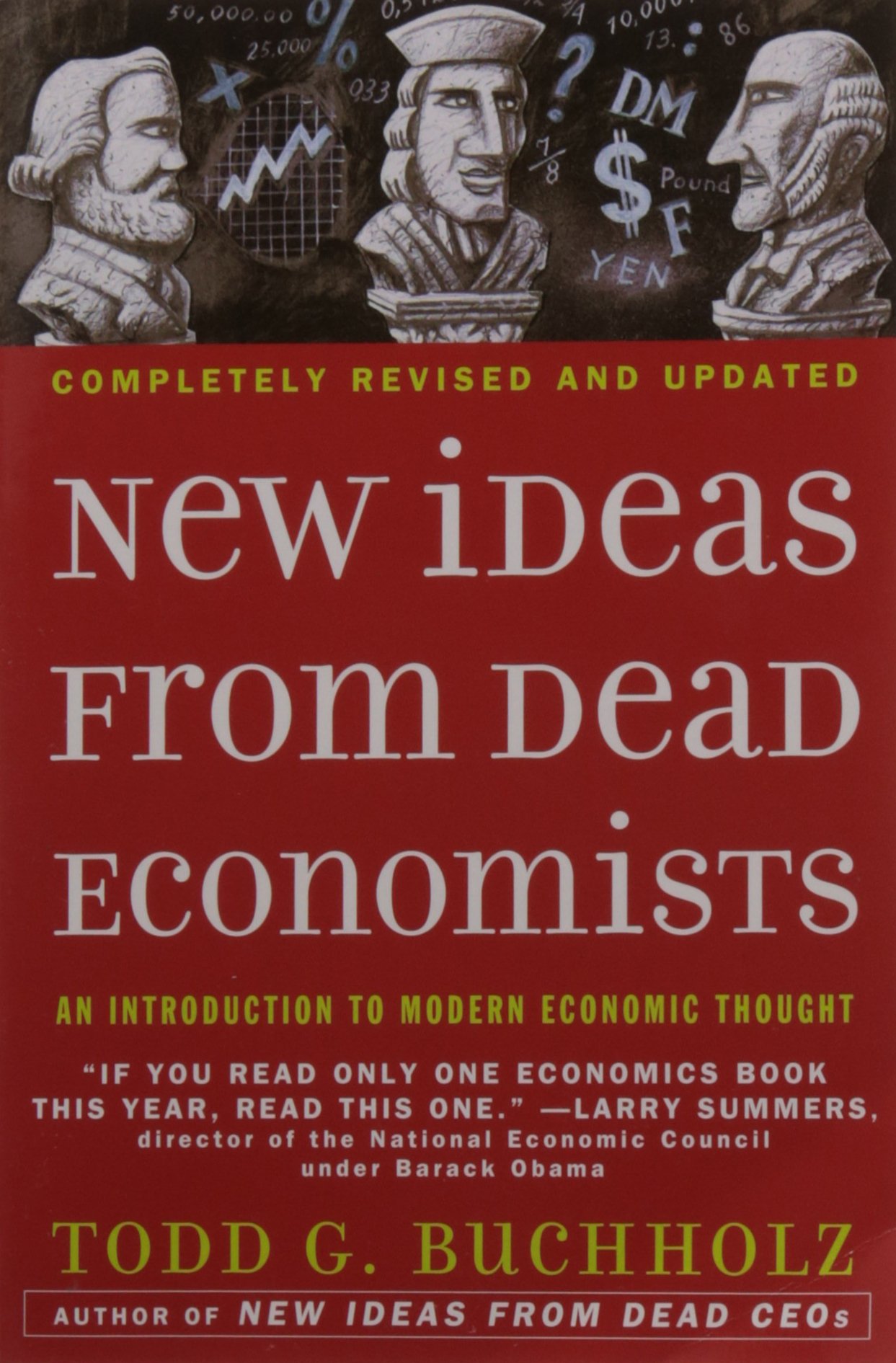
A witty, entertaining, accessible introduction to modern economic thought. Buchholz shows how the ideas of the great eco...
A witty, entertaining, accessible introduction to modern economic thought. Buchholz shows how the ideas of the great economic thinkers throughout history - Adam Smith, John Stuart Mill, Karl Marx, John Maynard Keynes, and others - apply to the world today. Each chapter is centred around one economist. The author seamlessly combines colourful historical anecdotes with explanations of how a particular economist influenced the way we think about the world today, making this a great read for anyone wanting to learn more about economics. This edition contains about 10,000 words of new material on the economic issues we are facing in the 21st century: Increasing demand for energy, the rise of China, international trade, ageing populations, health care and even global warming. Most of the new material will be integrated into the existing text in the appropriate chapter, and examples will be updated throughout. The author is also writing a new preface. Author: Todd G Buchholz ISBN:9780452288447
Read more
Show less
|
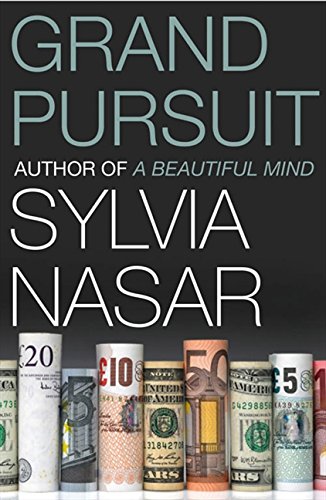
From the bestselling author of A Beautiful Mind, a brilliant new approach to the story of modern economics and to unders...
From the bestselling author of A Beautiful Mind, a brilliant new approach to the story of modern economics and to understanding how we got into today’s financial mess. As the twenty-first century faces new and ever more daunting economic obstacles, Sylvia Nasar tells the story of how our financial world came to function as it does today, and how a handful of men and women would change the lives of every person on the planet. Economics was not always associated with bankers and excess, or with recessions and bailouts. Economics, as we know it, was born in the nineteenth century when Charles Dickens and Henry Mayhew chronicled the destitution in London’s slums and wanted to turn money into a force for social good. Man’s material fate would be placed in his own hands, rather than left to destiny. The torch would be carried on by everyone from Marx and Engels to Keynes and Friedman, with revolutionary results. Filled with the stories of colourful lives and visions of the characters who shaped modern economics, Grand Pursuit is a fascinating history of the determining force of the past century, and a vital insight into how our world works now. ‘A history of economics which is full of flesh, bloom and warmth’ The Economist Author: Slyvia Nasar ISBN:9781841154565
Read more
Show less
|
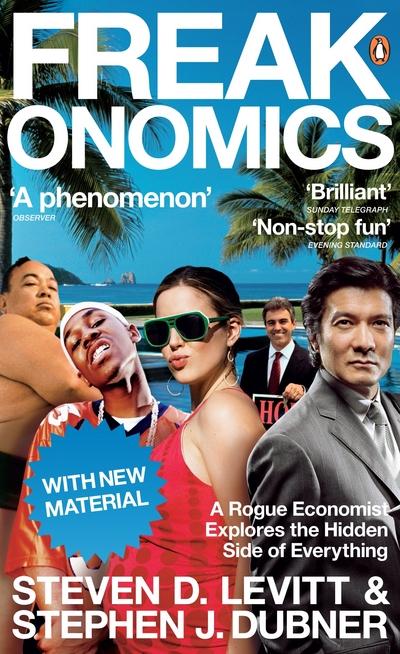
Which is more dangerous, a gun or a swimming pool? What do schoolteachers and sumo wrestlers have in common? Why do drug...
Which is more dangerous, a gun or a swimming pool? What do schoolteachers and sumo wrestlers have in common? Why do drug dealers still live with their moms? How much do parents really matter? What kind of impact did Roe v. Wade have on violent crime? Freakonomics will literally redefine the way we view the modern world. These may not sound like typical questions for an economist to ask. But Steven D. Levitt is not a typical economist. He is a much heralded scholar who studies the stuff and riddles of everyday life -- from cheating and crime to sports and child rearing -- and whose conclusions regularly turn the conventional wisdom on its head. He usually begins with a mountain of data and a simple, unasked question. Some of these questions concern life-and-death issues; others have an admittedly freakish quality. Thus the new field of study contained in this book: freakonomics. Through forceful storytelling and wry insight, Levitt and co-author Stephen J. Dubner show that economics is, at root, the study of incentives -- how people get what they want, or need, especially when other people want or need the same thing. In Freakonomics, they set out to explore the hidden side of ... well, everything. The inner workings of a crack gang. The truth about real-estate agents. The myths of campaign finance. The telltale marks of a cheating schoolteacher. The secrets of the Ku Klux Klan. What unites all these stories is a belief that the modern world, despite a surfeit of obfuscation, complication, and downright deceit, is not impenetrable, is not unknowable, and -- if the right questions are asked -- is even more intriguing than we think. All it takes is a new way of looking. Steven Levitt, through devilishly clever and clear-eyed thinking, shows how to see through all the clutter. Freakonomics establishes this unconventional premise: If morality represents how we would like the world to work, then economics represents how it actually does work. It is true that readers of this book will be armed with enough riddles and stories to last a thousand cocktail parties. But Freakonomics can provide more than that. It will literally redefine the way we view the modern world. Author: Steven D. Levitt, Stephen J. Dubner ISBN:9780141030081
Read more
Show less
|
In a time of rapid change in the world economy, this fascinating, concise, and user-friendly primer is the most reliable...
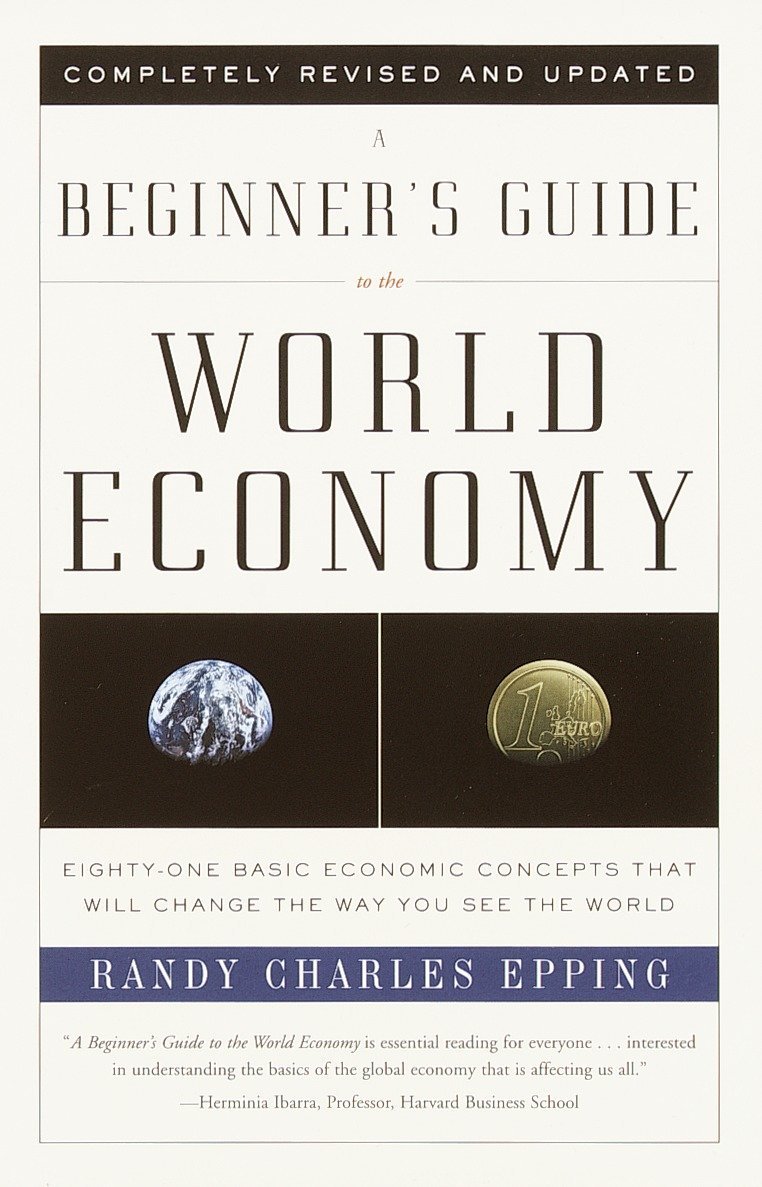
In a time of rapid change in the world economy, this fascinating, concise, and user-friendly primer is the most reliable tool for keeping track of what's happening. What is the new economy? What is globalization? Is the euro the final seal on European Union? How is e-commerce transforming our world beyond economics? What is virtual money, and does it have real value? How do social concerns and societal ills (drugs, poverty, AIDS, endangered natural resources) play a part in the rapidly changing world economy? What are multinationals, and do they signal the end of nationalism? These and many other pertinent issues are addressed in an enlightening and entertaining handbook for those who want to be economically literate (and who doesn't?). Author: Randy Charles Epping ISBN:9780375725791
Read more
Show less
|