|
Description
|
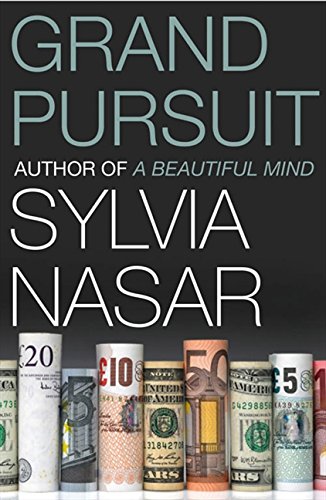
From the bestselling author of A Beautiful Mind, a brilliant new approach to the story of modern economics and to unders...
From the bestselling author of A Beautiful Mind, a brilliant new approach to the story of modern economics and to understanding how we got into today’s financial mess. As the twenty-first century faces new and ever more daunting economic obstacles, Sylvia Nasar tells the story of how our financial world came to function as it does today, and how a handful of men and women would change the lives of every person on the planet. Economics was not always associated with bankers and excess, or with recessions and bailouts. Economics, as we know it, was born in the nineteenth century when Charles Dickens and Henry Mayhew chronicled the destitution in London’s slums and wanted to turn money into a force for social good. Man’s material fate would be placed in his own hands, rather than left to destiny. The torch would be carried on by everyone from Marx and Engels to Keynes and Friedman, with revolutionary results. Filled with the stories of colourful lives and visions of the characters who shaped modern economics, Grand Pursuit is a fascinating history of the determining force of the past century, and a vital insight into how our world works now. ‘A history of economics which is full of flesh, bloom and warmth’ The Economist Author: Slyvia Nasar ISBN:9781841154565
Read more
Show less
|
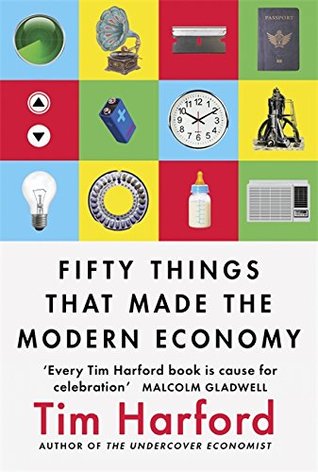
Based on the series produced for the BBC World Service Who thought up paper money? How did the contraceptive pill change...
Based on the series produced for the BBC World Service Who thought up paper money? How did the contraceptive pill change the face of the legal profession? Why was the horse collar as important for human progress as the steam engine? How did the humble spreadsheet turn the world of finance upside-down? The world economy defies comprehension. A continuously-changing system of immense complexity, it offers over ten billion distinct products and services, doubles in size every fifteen years, and links almost every one of the planet's seven billion people. It delivers astonishing luxury to hundreds of millions. It also leaves hundreds of millions behind, puts tremendous strains on the ecosystem, and has an alarming habit of stalling. Nobody is in charge of it. Indeed, no individual understands more than a fraction of what's going on. How can we make sense of this bewildering system on which our lives depend? From the tally-stick to Bitcoin, the canal lock to the jumbo jet, each invention in Tim Harford's fascinating new book has its own curious, surprising and memorable story, a vignette against a grand backdrop. Step by step, readers will start to understand where we are, how we got here, and where we might be going next. Hidden connections will be laid bare: how the barcode undermined family corner shops; why the gramophone widened inequality; how barbed wire shaped America. We'll meet the characters who developed some of these inventions, profited from them, or were ruined by them. We'll trace the economic principles that help to explain their transformative effects. And we'll ask what lessons we can learn to make wise use of future inventions, in a world where the pace of innovation will only accelerate. Author: Tim Harford ISBN:9781408709115
Read more
Show less
|
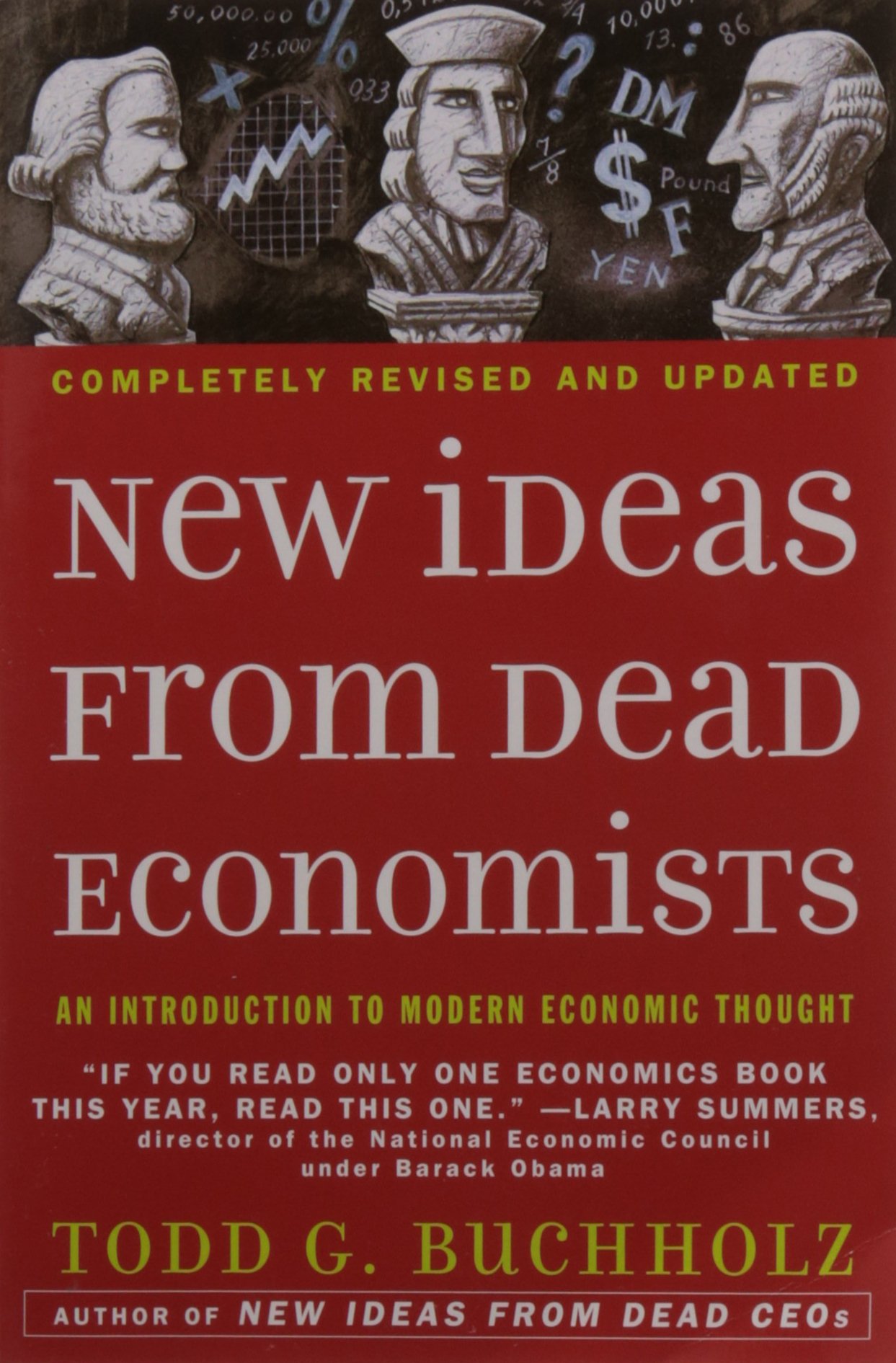
A witty, entertaining, accessible introduction to modern economic thought. Buchholz shows how the ideas of the great eco...
A witty, entertaining, accessible introduction to modern economic thought. Buchholz shows how the ideas of the great economic thinkers throughout history - Adam Smith, John Stuart Mill, Karl Marx, John Maynard Keynes, and others - apply to the world today. Each chapter is centred around one economist. The author seamlessly combines colourful historical anecdotes with explanations of how a particular economist influenced the way we think about the world today, making this a great read for anyone wanting to learn more about economics. This edition contains about 10,000 words of new material on the economic issues we are facing in the 21st century: Increasing demand for energy, the rise of China, international trade, ageing populations, health care and even global warming. Most of the new material will be integrated into the existing text in the appropriate chapter, and examples will be updated throughout. The author is also writing a new preface. Author: Todd G Buchholz ISBN:9780452288447
Read more
Show less
|
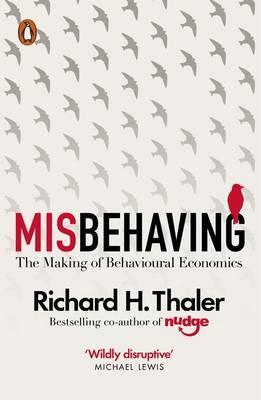
ECONOMIST, FINANCIAL TIMES and EVENING STANDARD BOOKS OF THE YEAR 2015 Shortlisted for the Financial Times and McKinsey...
ECONOMIST, FINANCIAL TIMES and EVENING STANDARD BOOKS OF THE YEAR 2015 Shortlisted for the Financial Times and McKinsey Business Book of the Year Award From the renowned and entertaining behavioural economist and co-author of the seminal work Nudge, Misbehaving is an irreverent and enlightening look into human foibles. Traditional economics assumes that rational forces shape everything. Behavioural economics knows better. Richard Thaler has spent his career studying the notion that humans are central to the economy - and that we're error-prone individuals, not Spock-like automatons. Now behavioural economics is hugely influential, changing the way we think not just about money, but about ourselves, our world and all kinds of everyday decisions. Whether buying an alarm clock, selling football tickets, or applying for a mortgage, we all succumb to biases and make decisions that deviate from the standards of rationality assumed by economists. In other words, we misbehave. Dismissed at first by economists as an amusing sideshow, the study of human miscalculations and their effects on markets now drives efforts to make better decisions in our lives, our businesses, and our governments. Coupling recent discoveries in human psychology with a practical understanding of incentives and market behaviour, Thaler enlightens readers about how to make smarter decisions in an increasingly mystifying world. He reveals how behavioural economic analysis opens up new ways to look at everything from household finance to assigning faculty offices in a new building, to TV quiz shows, sports transfer seasons, and businesses like Uber. When economics meets psychology, the implications for individuals, managers and policy makers are both profound and entertaining. Author: Richard H. Thaler ISBN:9780241951224
Read more
Show less
|